Teresa Graves The Trailblazing Actress Who Made Television History and Left an Indelible Mark on Entertainment

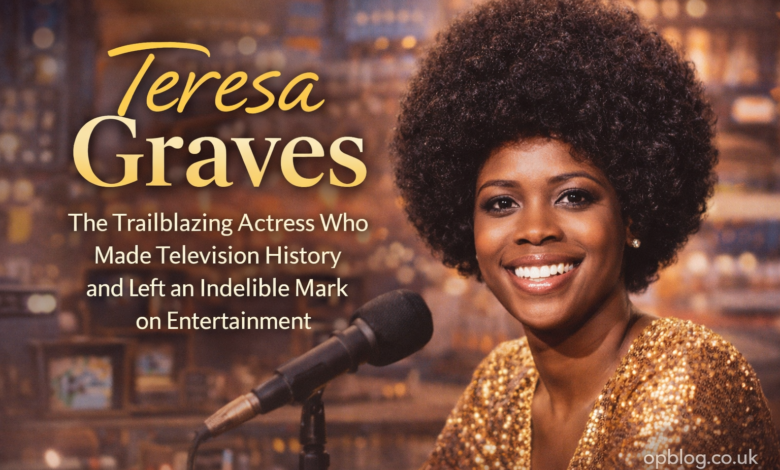
A Pioneering Force in Television History
Teresa Graves holds a unique and significant place in television history as a groundbreaking African American actress who shattered barriers during a pivotal era in entertainment. Best known for her starring role in the 1974 television series “Get Christie Love!,” Teresa became the first African American woman to star in her own hour-long drama series on network television. This achievement wasn’t just a personal milestone – it was a watershed moment for representation in an industry that had long marginalized women of color. At a time when opportunities for Black actresses were severely limited, Teresa’s success opened doors and challenged the status quo in ways that continue to resonate in today’s ongoing conversations about diversity and inclusion in entertainment.
What made Teresa Graves accomplishment even more remarkable was the nature of the role itself. Christie Love wasn’t a supporting character or a stereotype – she was a tough, intelligent, capable undercover detective who could hold her own in any situation. The character was sexy, smart, and unapologetically Black, representing a new kind of television heroine that audiences, particularly African American viewers, had rarely seen before. Teresa brought charisma, athleticism, and genuine acting chops to the role, creating a character that felt authentic and empowering. Her portrayal challenged the limited ways that Black women had previously been depicted on television and offered a vision of what was possible when talented performers were given substantial, multi-dimensional roles.
The cultural impact of Teresa Graves and “Get Christie Love!” extended far beyond television ratings and industry accolades. For young Black girls watching in the 1970s, seeing someone who looked like them playing a lead character who was strong, competent, and heroic was transformative. Teresa became a role model, proving that African American women could be action heroes, leading ladies, and cultural icons. Her influence can be traced through the decades to contemporary Black actresses who have followed in her footsteps, from Pam Grier’s blaxploitation films to today’s diverse television landscape. Teresa may not always receive the recognition she deserves in mainstream entertainment history, but her contribution to breaking down barriers was absolutely crucial to the progress that followed.
Early Life and Rise to Stardom

Born on January 10, 1948, in Houston, Texas, Teresa Graves showed an early aptitude for performance and entertainment that would eventually lead her to Hollywood. Growing up in a time of significant social change in America, particularly regarding civil rights and racial integration, Teresa’s formative years were shaped by both the limitations placed on African Americans and the growing movement challenging those restrictions. Her family eventually relocated to Los Angeles, California, where she would find opportunities in the entertainment industry that might not have been available had she remained in Texas. This move to the entertainment capital proved pivotal in launching her career.
Teresa Graves entry into show business came through music and variety shows, which were more accessible to Black performers than dramatic television roles at the time. She became a member of the singing group The Doodletown Pipers and appeared on various television variety programs in the late 1960s. Her breakthrough came when she joined the cast of “Rowan & Martin’s Laugh-In,” one of the most popular and innovative comedy shows of the era. As part of the Laugh-In ensemble from 1969 to 1970, Teresa showcased her comedic timing, versatility, and undeniable screen presence. The show’s fast-paced format, political satire, and willingness to tackle social issues provided the perfect platform for Teresa to demonstrate her talents to a nationwide audience.
Her time on Laugh-In proved to be the springboard to bigger opportunities. Teresa Graves performances caught the attention of producers and network executives who were beginning to recognize, partly due to changing social attitudes and partly due to economic incentives, that there was an audience hungry for more diverse programming. When the opportunity came to star in “Get Christie Love!,” Teresa was ready. She had proven she could handle comedy, she had the charisma necessary for a leading role, and she possessed the athletic ability required for the action sequences that would be integral to the show. All these elements came together to make her the perfect choice for a role that would define her career and cement her place in television history.
Get Christie Love! and Cultural Impact
“Get Christie Love!” premiered on September 11, 1974, on ABC and immediately made waves in the television landscape. Based on the novel “The Ledger” by Dorothy Uhnak, the series followed Christie Love, an undercover detective for the Los Angeles Police Department’s Special Investigations Division. The show combined action, crime-solving, and social commentary in a format that appealed to a broad audience while specifically resonating with African American viewers who finally saw themselves represented in a leading role on primetime television. Teresa Graves Christie Love was tough, fashionable, street-smart, and able to navigate both the underworld she infiltrated and the police bureaucracy she served.
The show’s most famous element was undoubtedly Christie Love catchphrase: “You’re under arrest, sugar!” This line, delivered with Teresa Graves perfect blend of authority and sass, became iconic and is still referenced in pop culture today. It represented a new kind of television dialogue – confident, playful, and distinctly African American in its vernacular. The phrase encapsulated everything that made the character appealing: she was professional and capable, but she also had personality and style. Teresa’s delivery made the line memorable and helped establish Christie Love as a character with a distinct voice and presence, not just another generic TV detective Teresa Graves.
While “Get Christie Love!” only ran for one season (22 episodes), its impact far exceeded its brief tenure on the air. The show faced various challenges, including network interference, scheduling issues, and the inherent difficulties of maintaining quality in the demanding production schedule of a 1970s hour-long drama. Despite these obstacles, Teresa’s performance remained consistently strong, and the show developed a loyal following. Teresa Graves The series addressed social issues including racism, sexism, and urban crime in ways that were progressive for the time. Though it may seem dated by contemporary standards, “Get Christie Love!” was genuinely groundbreaking in its era, and its influence can be seen in later shows featuring strong Black female leads, from “Living Single” to “Scandal” to “Queen Sugar.”
Life Beyond the Spotlight
After “Get Christie Love!” ended in 1975, Teresa Graves made a decision that shocked many in the entertainment industry – she essentially walked away from her acting career at its peak. Teresa had become a Jehovah’s Witness, and her deepening religious faith led her to reassess her priorities and the types of roles she was willing to accept. The entertainment industry of the 1970s often expected actresses to take on roles with sexual content or situations that conflicted with her religious beliefs, and Teresa chose her faith over her career. This decision demonstrated a strength of conviction and personal integrity that was rare in Hollywood, where the pressure to capitalize on success and maintain relevance can be overwhelming.
Teresa Graves withdrawal from acting wasn’t a gradual fade from the spotlight – it was a deliberate choice to pursue a different kind of life. She dedicated herself to her religious community, engaging in door-to-door ministry and other activities central to the Jehovah’s Witness faith. For someone who had experienced the adulation of fans and the perks of celebrity, this represented a radical shift in lifestyle and priorities. However, by all accounts, Teresa found fulfillment in this new direction. She spoke in interviews about the peace she found in her faith and her lack of regret about leaving entertainment behind. This perspective offers an interesting counternarrative to the typical Hollywood story, reminding us that fame and success don’t necessarily equal happiness or fulfillment.
While she largely stayed out of the public eye, Teresa Graves remained a beloved figure to those who remembered her groundbreaking work. Fans continued to appreciate “Get Christie Love!” through reruns and later home video releases, introducing new generations to Teresa’s trailblazing performance. Occasionally, there would be rumors of a possible comeback or reunion, but Teresa remained committed to her chosen path away from entertainment. Her story became one of those fascinating “what if” scenarios in television history – what might she have accomplished had she continued acting? What other barriers might she have broken? While these questions remain unanswered, Teresa’s actual choice to prioritize personal values over career advancement offers its own kind of inspiration.
The Tragic End of a Remarkable Life
The story of Teresa Graves took a devastating turn on October 10, 2002, when she died at the age of 54 in a tragic house fire at her home in Los Angeles. The fire broke out in the early morning hours, and despite efforts by firefighters to rescue her, Teresa Graves succumbed to smoke inhalation and burns. The sudden and tragic nature of her death shocked those who knew her and the fans who had followed her career. Investigations into the fire suggested it may have been caused by an electrical problem, a tragic accident that claimed the life of a woman who had contributed so much to television history yet lived her later years in relative obscurity.
Teresa Graves death brought renewed attention to her legacy and accomplishments, with obituaries and tributes highlighting her pioneering role in television. Many younger people learned for the first time about her groundbreaking achievement as the first Black woman to star in her own hour-long drama series. The tributes also reflected on the path she had chosen, noting the courage it took to walk away from fame and the dignity with which she lived her private life. The outpouring of respect and affection demonstrated that while Teresa may have left the spotlight, she had not been forgotten by those whose lives she had touched through her work.
The circumstances of Teresa Graves death also sparked conversations about how television pioneers, particularly those from marginalized communities, are sometimes forgotten or undervalued by the industry they helped transform. While she never sought recognition or acclaim in her later years, the limited acknowledgment of her contributions during her lifetime represents a broader problem in how entertainment history is recorded and celebrated. Her death served as a somber reminder of the importance of honoring trailblazers while they’re still alive to receive that recognition, and of ensuring that diverse voices and stories are preserved as part of the historical record.
Legacy and Influence on Modern Television
Teresa Graves impact on television extends far beyond the single season of “Get Christie Love!” Her breakthrough role proved that audiences would embrace a Black female action hero, paving the way for countless performers who followed. When you watch contemporary shows featuring strong Black female leads – whether it’s Kerry Washington in “Scandal,” Viola Davis in “How to Get Away with Murder,” or Angela Bassett in “9-1-1” – you’re seeing the legacy of what Teresa Graves accomplished in 1974. She demonstrated that Black women could carry a television series, attract audiences, and deliver compelling performances in complex roles.
The character of Christie Love has maintained cultural relevance through references in music, film, and television. Various attempts have been made over the years to reboot or reimagine the character for new generations, most recently with a proposed remake that would bring Christie Love to contemporary audiences. These efforts speak to the enduring appeal of the character and the recognition that Teresa created something with lasting value. Even decades after the original series ended, there’s an understanding that Christie Love represented something important – a vision of Black female empowerment and capability that deserves to be shared with new audiences.
Beyond specific shows and characters, Teresa Graves decision to prioritize her personal values over career success offers a different kind of legacy. In an industry that often demands total commitment and can be unforgiving to those who step away, Teresa’s choice to leave on her own terms and find fulfillment outside of entertainment challenges conventional notions of success. Her story reminds us that there are multiple ways to live a meaningful life, and that the courage to choose an unconventional path can be just as admirable as professional achievement. This aspect of her legacy may not be as visible as her television work, but it’s equally important in understanding the full measure of who Teresa Graves was.
Remembering a Trailblazer
Today, Teresa Graves deserves to be remembered and celebrated as a true pioneer who changed television at a crucial moment in its history. Her contribution to representation in entertainment came at a time when such representation was desperately needed and far too rare. She proved that Black women could be action heroes, sex symbols, and leading ladies all at once, challenging the limited and often demeaning ways that African American women had been portrayed in media. Her success made it slightly easier for the next generation of Black actresses to find opportunities, even though the struggle for equitable representation continues to this day.
The story of Teresa Graves also highlights the importance of preserving and sharing the histories of trailblazers who may not have received the recognition they deserved during their lifetimes. Too often, the contributions of women and people of color in entertainment are overlooked or forgotten, creating an incomplete and inaccurate historical record. By remembering Teresa and sharing her story with new generations, we ensure that her achievements remain part of our collective cultural memory. We honor not just what she accomplished professionally, but also the barriers she overcame and the path she cleared for others.
For those who remember watching “Get Christie Love!” when it first aired, Teresa Graves represents a specific moment in television history when seeing yourself represented on screen felt revolutionary. For younger generations discovering her work through classic TV channels or streaming services, she offers a glimpse into how far we’ve come and how much further we still need to go in terms of representation and inclusion. Regardless of when you discovered her, Teresa Graves stands as a reminder that individual courage and talent can change an industry, and that the impact of groundbreaking work can resonate for generations, even when the creator herself has chosen a quieter path. Her legacy is secure, her contributions undeniable, and her place in television history absolutely deserved.