Rocket League Ranks Your Complete Guide to Climbing the Competitive Ladder from Bronze

The Rocket League Ranking System
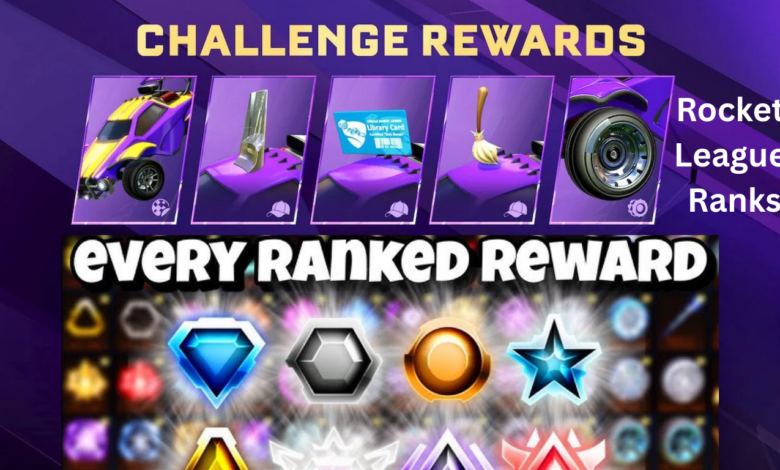
Rocket League Ranks competitive ranking system is one of the most well-designed and transparent rank structures in all of competitive gaming, providing players with clear progression paths and measurable goals to work toward. Unlike some games where ranks feel arbitrary or confusing, Rocket League’s system is straightforward—you play ranked matches, you gain or lose MMR (Matchmaking Rating) based on wins and losses, and your visible rank reflects your MMR bracket. This clarity makes it easy to understand where you stand and what you need to do to improve, which is refreshing in an era where many competitive games obscure their ranking mechanics.
The ranking system consists of several tiers Rocket League Ranks each divided into divisions, creating a granular progression that lets you feel advancement even when you’re not jumping entire rank tiers. The ranks from lowest to highest are: Bronze, Silver, Gold, Platinum, Diamond, Champion, Grand Champion, and Supersonic Legend. Each rank except Supersonic Legend is divided into three divisions (I, II, and III), meaning you’ll progress through Bronze I, Bronze II, Bronze III, then advance to Silver I, and so on. This structure provides frequent milestones and keeps players engaged with tangible short-term goals rather than facing massive jumps between ranks.
What makes Rocket League Ranks particularly interesting is that it’s playlist-specific, meaning your rank in Standard (3v3) might be completely different from your rank in Doubles (2v2) or Duels (1v1). This allows players to specialize in particular game modes or recognize that their skills translate differently across playlists. Someone might be Diamond in 3v3 where positioning and rotation are crucial, but only Platinum in 1v1 where mechanical skill and boost management matter more. Understanding these distinctions helps players focus their improvement efforts on the playlists they care most about.
Breaking Down Each Rank Tier and What Defines Them
Bronze rank is where everyone starts their Rocket League Ranks competitive journey, and it’s characterized by players still learning the absolute fundamentals of the game. Bronze players are figuring out basic car control, learning to hit the ball consistently, and understanding that rotating back to defense is actually important. Matches at this level often resemble chaotic pinball, with all players chasing the ball regardless of position, minimal awareness of boost management, and almost no aerial ability. If you’re in Bronze, don’t be discouraged—everyone starts here, and improvement comes quickly once you focus on fundamentals.
Silver and Gold ranks represent players Rocket League Ranks grasped basic mechanics but still have significant consistency issues. Silver players can hit the ball intentionally most of the time and might attempt basic aerials, though success rates vary wildly. Gold players show improved mechanical ability—they can aerial with some reliability, perform basic dribbles, and understand rotation concepts even if execution is inconsistent. The main difference between Silver, Gold, and lower Platinum players is consistency rather than knowledge; they know what they should do but don’t execute reliably under pressure.
Platinum and Diamond ranks are where players transition from casual competence to genuinely skilled gameplay. Platinum players demonstrate solid fundamental mechanics, reasonable positioning, and can execute aerials, wall shots, and basic team plays with decent consistency. Diamond is where mechanical skill becomes genuinely impressive to casual observers—fast aerials, ceiling shots, flip resets, and advanced dribbling techniques start appearing regularly. Rocket League Ranks Diamond players understand advanced rotation, boost stealing, shadowing defense, and can read the game several touches ahead. This is where Rocket League Ranks transforms from a fun car soccer game into a genuinely competitive esport requiring dedication to master.
Champion, Grand Champion, and Supersonic Legend represent the elite tiers where players have mastered fundamentals and are refining advanced techniques and game sense. Champion players execute mechanics that would look impossible to lower-Rocket League Ranks players—consistent air dribbles, flip resets, double taps, and precise passing plays. Grand Champions are essentially semi-professional level, with some competing in regional tournaments and leagues. Supersonic Legend, the highest rank, is reserved for the absolute best players globally—those who could potentially compete professionally or who dominate the highest level ranked matches. The skill gap between Champion I and Supersonic Legend is enormous, representing hundreds or thousands of hours of dedicated practice.
How MMR Works and Rank Distribution
MMR, or Matchmaking Rocket League Ranks, is the numerical value underlying your visible rank, and understanding how it works helps demystify the ranking system. Every player has an MMR number that increases when you win and decreases when you lose, with the amount gained or lost depending on factors like your opponents’ MMR relative to yours and whether you’re in a party with players of different ranks. When your MMR crosses certain thresholds, you rank up or rank down. For example, reaching 1195 MMR might promote you from Platinum III to Diamond I, while dropping below 1195 would demote you back to Platinum III.
The distribution of players across ranks follows a bell curve, with the majority of the player base concentrated in Gold and Platinum ranks. According to various tracking sites that aggregate Rocket League Ranks statistics, roughly 40-50% of competitive players sit somewhere between Gold I and Platinum III. Diamond represents approximately the top 25-30% of players, Champion is around the top 5-10%, and Grand Champion and Supersonic Legend together represent less than 1% of the competitive population. This distribution means that reaching Champion already puts you among the elite minority of Rocket League players, even if you’re nowhere near professional level.
Understanding rank distribution helps set realistic goals and appreciate your achievements. If you’ve reached Diamond, you’re literally better than 70% of people who play Rocket League Ranks competitively—that’s genuinely impressive even if watching pro players makes you feel inadequate. The journey from Platinum to Diamond might feel frustrating, but you’re competing against increasingly skilled opponents as you approach the top quartile of players. Similarly, the grind from Champion to Grand Champion is brutal precisely because you’re fighting to break into the top percentile. Perspective on where you stand relative to the entire player base can make the grind feel more rewarding.
Essential Skills Needed for Each Rank Level
Climbing out of Bronze and Silver primarily requires mastering basic car control and ball contact consistency. Focus on training packs that improve your ability to hit the ball where you intend, practice basic aerials until you can reach balls at moderate heights reliably, and learn to position yourself on defense rather than constantly ball-chasing. Rocket League Ranks These fundamentals sound simple but require genuine practice to internalize. Spending 15-20 minutes in free play or custom training before jumping into ranked helps build muscle memory that translates directly to better in-game performance.
Reaching and progressing through Gold and Platinum demands improved mechanics and basic game sense. You need reliable fast aerials—the technique of boosting and jumping simultaneously to reach aerial balls faster. Learn basic dribbling and flicks, practice wall shots until they’re consistent, and develop better boost management so you’re not constantly Rocket League Ranks starving yourself of boost at crucial moments. Equally important is understanding rotation—when to challenge, when to rotate back, and how to position yourself as the second or third player. Many Platinum players have decent mechanics but terrible positioning, or vice versa; you need both to reach Diamond.
Breaking into Diamond and beyond requires advanced mechanics and sophisticated game sense. You should be comfortable with fast aerials, half-flips, wave dashing, ceiling shots, and air dribbling even if you don’t use all these techniques in every match. More importantly, Rocket League Ranks you need excellent positioning, rotation discipline, and the ability to read opponents’ intentions. High-level Rocket League is less about mechanical flashiness and more about being in the right place at the right time, making high-percentage plays, and avoiding mistakes that gift opponents easy goals. Watch your replays from the opponent’s perspective to understand what openings your positioning creates and how better players would punish your mistakes.
Common Mistakes Holding Players Back at Each Level
Bronze and Silver players typically struggle with ball-chasing—the tendency to constantly pursue the ball regardless of whether it makes tactical sense. Everyone wants to touch the ball, but Rocket League Ranks is fundamentally about positioning and choosing the right moments to challenge. If all three players on a team are converging on the ball simultaneously, nobody’s in position to defend the inevitable counterattack. Learning to recognize when your teammate has a better angle and rotating back instead of going for a contested touch is one of the most important skills for escaping lower ranks.
Gold and Platinum players often sabotage themselves with inconsistent decision-making and mechanical overconfidence. They’ve learned some advanced techniques and want to use them in matches, attempting ceiling shots Rocket League Ranks or flip resets when a simple power shot would be more effective. This showboating leads to turnovers and puts their team at disadvantage. Another common mistake is poor boost management—constantly taking the corner boosts even when they have 60 boost already, leaving teammates boost-starved. Learning to play effectively with 30-50 boost and only grabbing corner boosts when necessary is crucial for team play.
Diamond and Champion players frequently Rocket League Ranks hit walls related to reading the game and adapting to opponents. They have the mechanical ability to compete at higher levels but struggle with anticipation, shadow defense, and adjusting their playstyle based on opponent tendencies. Another common issue is autopilot rotation—following rotation patterns rigidly without reading the actual game state. Sometimes the correct play is cutting rotation to challenge a ball your teammate can’t reach, or staying upfield for a passing play instead of immediately rotating back. High-level Rocket League requires flexible decision-making that responds to real-time game situations rather than following predetermined patterns.
Training Methods and Resources for Rank Improvement
Custom training packs are essential tools for developing mechanical skills at every rank level. The Rocket League Ranks community has created thousands of training packs targeting specific skills—aerial shots, redirects, ground shots, dribbling, and more. Spending 20-30 minutes in custom training before ranked sessions helps warm up mechanics and builds consistency. Focus on packs slightly above your current ability level—challenging enough to require focus but not so difficult that you fail every attempt. Consistent daily training builds muscle memory that translates directly into ranked performance improvement.
Free play is arguably the most valuable training tool available, yet many players underutilize it. Unlike training packs with predetermined ball positions, free play lets you practice Rocket League Ranks game scenarios—dribbling, aerial control, recoveries, and chaining mechanics together fluidly. High-level players spend hours in free play developing car control and trying new techniques. Challenge yourself to maintain ball control while boosting around the field, practice flip resets without worrying about scoring, and work on awkward aerial angles you struggle with in matches. The freedom to experiment without pressure accelerates learning.
Watching professional players and educational content accelerates improvement by showing what high-level play actually looks like. Streamers and YouTubers like Flakes, Wayton Pilkin, and Thanovic create educational content breaking down positioning, rotation, and game sense for different rank levels. Watch how professionals position themselves off-ball, how they approach challenges, and what decisions they make in various game states. Analyzing replays of your own matches from different camera perspectives reveals positioning mistakes and decision-making errors you Rocket League Ranks notice during the game. Regular replay analysis combined with educational content creates a feedback loop that accelerates learning beyond just grinding ranked matches.
Mindset and Mental Game for Climbing Ranks
Maintaining the right mindset separates players who steadily climb from those who plateau despite having adequate mechanical skills. Understand that ranking up is a marathon, not a sprint—you won’t jump from Gold to Champion in a week no matter how much you play. Focus on improving specific weaknesses rather than obsessing over rank points. If you genuinely get better at Rocket League Ranks rank increases naturally follow. Chasing rank without improving fundamentals leads to frustration and tilt when inevitable losing streaks occur.
Dealing with toxic teammates and opponents tests every player’s mental fortitude in ranked. You’ll encounter people who spam “What a save!” after every goal against, blame teammates for their own mistakes, or forfeit after going down 0-1 with four minutes remaining. Disable chat entirely if toxicity affects your performance, or limit it to quick chat only. Remember that you can’t control teammates or opponents, only your own play. Rocket League Ranks Every match is an opportunity to improve something about your game regardless of the outcome. This perspective shift from outcome-focused to improvement-focused reduces tilt and makes ranked grinding more sustainable.
Taking breaks and managing session length prevents burnout and rank volatility. Playing while tilted from previous losses creates a negative spiral where poor mindset leads to worse play, causing more losses and deeper tilt. If you lose two or three matches in a row, Rocket League Ranks take a break—grab food, watch a stream, play casual, or just step away from the game entirely. Coming back with a clear head improves performance far more than grinding through tilt. Similarly, playing while exhausted or distracted rarely produces rank gains. Quality focused sessions beat endless grinding in terms of actual improvement and rank progression over time.