Human Environment Interaction How People and Nature Shape Each Other Every Single Day

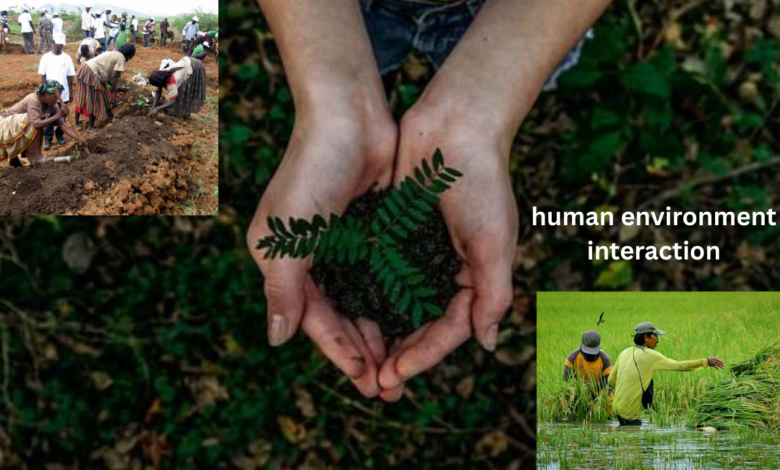
Human Environment Interaction There a conversation happening all around us, constantly, whether we tune into it or not. It’s the ongoing exchange between human beings and the natural world — a relationship so deeply woven into everything we do that most people move through it without ever stopping to think about it. That relationship has a name: human environment interaction. And understanding it might be one of the most important things you can do as a citizen of this planet right now.
Human environment isn’t just a geography textbook term. It’s the explanation behind why cities flood, why certain cultures eat what they eat, why some regions are wealthy and others struggle, and why the climate is changing in ways that affect every living thing on Earth. It’s the lens through which everything connected to people and nature comes into focus — and once you start seeing through it, you can’t unsee it.
What Human Environment Interaction Really Means
Human environment interaction is the study of the mutual, ongoing relationship between human societies and the natural environments they inhabit. The key word there is mutual. This isn’t a one-way street where humans simply act on nature. Nature acts back — shaping cultures, economies, migration patterns, technologies, and survival strategies in return.
The framework of human interaction is built on three foundational principles that geographers and environmental scientists have relied on for generations. The first is dependency — the undeniable fact that human life depends entirely on natural systems for food, clean water, breathable air, raw materials, and energy. The second is adaptation — the remarkable ability of human communities to adjust their behavior, technology, architecture, and culture to function within the constraints and opportunities of their specific environments. The third is modification — the human tendency to actively reshape natural environments to better serve human needs and ambitions.
What makes human environment interaction such a powerful concept is that these three principles don’t operate in isolation. They form a continuous, dynamic loop. A community depends on a river for water, adapts its agricultural practices around seasonal flooding patterns, then modifies the river with irrigation channels and eventually a dam. That modification changes downstream ecosystems, which forces new adaptations, which creates new dependencies. environment interaction is never a finished story — it’s an evolving conversation between civilization and the natural world, and understanding it means paying attention to the whole exchange, not just one side of it.
The Dependency Dimension of Human Environment Interaction

Of the three principles, dependency is the most humbling. Modern life has done an extraordinary job of insulating people from the visible signs of their reliance on nature, but that reliance has never diminished — it has only deepened. Human environment interaction at the dependency level is total, non-negotiable, and worth examining honestly.
Food is the most immediate expression of this dependency within human interaction. Every calorie that sustains human life ultimately traces back to natural systems — healthy soil teeming with microbial life, reliable rainfall or irrigation water, pollinators doing their quiet but essential work, and a stable enough climate to support consistent growing seasons. Industrial agriculture has made food production more efficient and scalable, but it has not made it independent of nature. Soil degradation, aquifer depletion, and climate-driven crop failures are all reminders that human environment at the food level is as real and consequential as it has ever been.
Water dependency is another critical dimension of human environment interaction that is becoming increasingly urgent globally. Freshwater is finite, unevenly distributed, and under growing pressure from population growth, agricultural demand, industrial use, and climate change. Communities across the world — from sub-Saharan Africa to the American Southwest — are confronting the hard limits of their water dependency in ways that are reshaping economies, triggering migration, and testing political systems. Human environment interaction through water dependency is not a future problem. It is a present one, already reshaping human geography in real time.
Energy dependency completes the picture. The entire infrastructure of modern civilization — transportation, manufacturing, heating, cooling, digital systems — runs on energy extracted from natural sources. For most of human history, that energy came directly from wood, wind, water, and muscle. The shift to fossil fuels transformed the scale and speed of dramatically, enabling unprecedented economic growth while simultaneously triggering the atmospheric changes that now define the climate crisis. Understanding energy dependency is central to understanding the full scope of what human environment interaction means in the 21st century.
Adaptation as a Core Expression of Human Environment Interaction
Adaptation is where human environment interaction gets genuinely fascinating. Across thousands of years of history and across every climate zone on Earth, human communities have demonstrated an extraordinary capacity to read their environments and develop sophisticated responses to the challenges and opportunities those environments present.
Architecture is one of the most tangible expressions of human environment interaction through adaptation. Traditional building styles around the world are essentially physical records of how communities learned to manage their specific climate conditions. The wind towers of Persian architecture funneled natural air currents to cool interior spaces without any mechanical assistance. The elevated homes of flood-prone river delta communities in Southeast Asia kept families safe above seasonal high water. The sod houses of the North American Great Plains used the earth’s natural insulating properties to survive brutal winters. None of these design traditions emerged from theory — they emerged from generations of direct refined through trial, error, and accumulated wisdom.
Agricultural adaptation offers equally compelling examples of human interaction in action. The terrace farming systems developed in the Andes by Andean civilizations represent a masterclass in working with challenging terrain rather than against it. The qanat irrigation systems of ancient Persia moved groundwater across arid landscapes through gravity-fed underground channels — an engineering solution born entirely from deep human environment interaction with desert hydrology. The rice paddy systems of East and Southeast Asia transformed marginal wetland environments into some of the most productive agricultural landscapes in the world. Each of these systems reflects centuries of intimate human environment interaction with specific landscapes, climates, and ecological conditions.
Cultural practices, seasonal rhythms, and social structures also bear the unmistakable imprint of human environment through adaptation. Nomadic herding cultures developed around the predictable movement of animal populations and seasonal pastures. Arctic communities built entire knowledge systems around ice conditions, weather patterns, and marine mammal behavior. Monsoon-dependent agricultural societies organized their calendars, festivals, and social rituals around rainfall cycles. The diversity of human culture is, at a foundational level, a diversity of adaptive responses to the diversity of environments that human communities have inhabited and navigated through human environment interaction over millennia.
Modification When Human Environment Interaction Reshapes the Natural World
Modification is the dimension of human interaction that defines the modern era most visibly, and it is where the consequences of that interaction are most profound and most difficult to reverse. Humans have always modified their environments — burning vegetation, redirecting streams, clearing land — but the scale of modification since the Industrial Revolution has transformed the planet in ways that have no historical precedent.
Deforestation stands as one of the most significant and far-reaching examples of environmental modification through human environment interaction. Forests are not simply collections of trees — they are complex, interconnected ecological systems that regulate regional water cycles, store vast quantities of carbon, anchor soil against erosion, moderate local temperatures, and support biodiversity that underpins entire food webs. When environment interaction takes the form of large-scale forest clearance for agriculture, cattle ranching, or resource extraction, the consequences extend far beyond the cleared land. Regional rainfall patterns shift, carbon stored over centuries re-enters the atmosphere, soil fertility declines, and rivers that once ran clear with forest-filtered water carry sediment loads that damage downstream ecosystems and water supplies.
Urbanization is another transformative form of modification at the heart of human environment interaction. The replacement of natural landscapes with cities — vast networks of concrete, asphalt, steel, and glass — fundamentally alters how heat, water, and air move through an area. Urban heat islands, where city temperatures run several degrees warmer than surrounding rural areas due to the heat-absorbing properties of built surfaces, are a direct and measurable consequence of through urbanization. Stormwater management crises, where impermeable urban surfaces prevent natural water absorption and generate flash flooding during heavy rain, are another. These are not accidental outcomes — they are predictable results of modifying natural systems without fully accounting for the services those systems provided.
The modification of water systems through dams, irrigation networks, and groundwater extraction has reshaped entire continental landscapes through human environment interaction. The Aral Sea, once one of the largest lakes in the world, effectively disappeared over decades as rivers feeding it were diverted for Soviet-era cotton irrigation — one of the most dramatic examples of human environment through water modification in history. The Colorado River in the American West, managed through an elaborate system of dams and water rights agreements, no longer reliably reaches the ocean. These modifications enabled agricultural and urban development at massive scale while simultaneously creating ecological deficits that are now challenging the long-term sustainability of the very human systems they were built to support.
Human Environment Interaction in the Context of Climate Change
Climate change is the most consequential expression of human environment interaction in the history of civilization, and it brings every dimension of the relationship — dependency, adaptation, and modification — into sharp and urgent focus simultaneously.
The mechanism is rooted in modification. Centuries of fossil fuel combustion, combined with large-scale deforestation and industrial agriculture, have altered the chemical composition of the Earth’s atmosphere, increasing concentrations of carbon dioxide and other greenhouse gases to levels not seen in hundreds of thousands of years. This is human environment interaction operating at a planetary scale — a modification so comprehensive that it is changing the fundamental conditions of life on Earth.
The consequences feed directly back into dependency and adaptation. Rising temperatures, shifting precipitation patterns, more frequent and intense extreme weather events, melting ice sheets, and rising sea levels are all disrupting the natural systems that human societies depend on for food, water, shelter, and economic stability. Coastal communities face existential threats from flooding. Agricultural regions face collapsing yields as growing conditions shift faster than farming systems can adapt. Water-stressed regions face accelerating scarcity. Human environment interaction through climate change is not a distant scenario — it is reshaping human geography, economics, and security right now.
The adaptation challenge that climate change presents is unprecedented in its scale and complexity within the history. Communities are being asked to adapt not just to new environmental conditions, but to conditions that are themselves continuously changing. Infrastructure built for historical climate patterns is becoming obsolete. Agricultural knowledge refined over generations is losing its reliability. The speed of required adaptation within this dimension of human environment interaction is testing the limits of human institutional capacity in ways that have no easy historical parallels.
Why Human Environment Interaction Deserves More Attention
Human environment interaction deserves a central place in how we educate, plan, govern, and make decisions — not as an abstract academic concept, but as a practical framework for understanding the world and acting responsibly within it.
Every major challenge on the global agenda right now — climate change, food and water security, biodiversity loss, pandemic risk, resource conflict — is fundamentally a human environment interaction problem. These challenges did not emerge from nowhere. They are the cumulative result of human environment interaction patterns built up over decades and centuries, often without adequate understanding of the feedback loops and long-term consequences involved.
At the individual level, engaging with environment interaction more consciously means connecting daily decisions to their environmental consequences and understanding that the environment is not an external backdrop to human life but the living system within which human life exists. At the systems level, it means designing cities, agricultural systems, energy infrastructure, and economic frameworks that genuinely account for the natural systems they depend on and modify.
Final Thoughts on Human Environment Interaction
Human environment interaction is the foundational story of our species — the story of how we have survived, built civilizations, adapted to extraordinary challenges, and in the process transformed the planet in ways both brilliant and deeply problematic.
The chapter being written right now through human environment interaction is the most consequential in that story. The decisions made in the coming decades about energy, land use, water, and ecosystems will shape the conditions of human life for generations. Getting those decisions right requires a clear, honest, and sophisticated understanding of human environment interaction in all its complexity — the dependencies that bind us to natural systems, the adaptations that demonstrate our resilience, and the modifications that demand our greatest responsibility.
We are not separate from the environment. We are part of it. And everything changes when we truly internalize that truth.