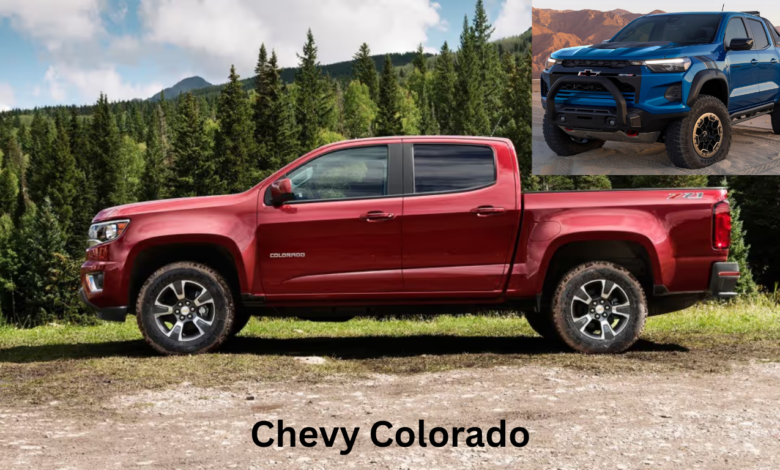
Chevy Colorado has carved out an impressive reputation in the midsize truck segment, offering a compelling alternative to both full-size pickups and smaller competitors. If you’re in the market for a truck that balances capability, fuel efficiency, and everyday drivability, the Colorado deserves serious consideration. Unlike the massive full-size trucks that dominate American roads, the Colorado delivers genuine truck utility in a package that’s easier to maneuver in tight spaces, park in standard garages, and navigate through city streets without feeling like you’re piloting a yacht.
What sets the Chevy Colorad apart in the increasingly competitive midsize truck market is Chevy’s commitment to offering genuine capability rather than just creating a smaller version of their full-size Silverado. This truck can tow up to 7,700 pounds when properly equipped, haul serious payloads in its bed, and tackle off-road terrain that would make sedan owners weep—all while delivering better fuel economy than its bigger siblings. For many truck buyers, the Colorado hits that sweet spot where you’re not sacrificing the utility you actually need while avoiding the excess size and fuel consumption you don’t.
The current generation Colorado, which received a complete redesign for the 2023 model year, represents Chevy Colorad most refined and capable midsize truck yet. With improved technology, updated styling, enhanced off-road variants, and powertrain options that prioritize real-world usability, the Colorado has evolved from being just an economical truck choice to being a legitimately desirable vehicle that competes effectively against rivals like the Toyota Tacoma, Ford Ranger, and Nissan Frontier. Whether you’re a weekend warrior, a tradesperson who needs a work vehicle, or someone who just wants the versatility of truck ownership, the Colorado offers compelling arguments for consideration.
Engine Options and Performance Capabilities
The Chevy Colorad powertrain lineup has evolved significantly with the latest generation, moving away from the previous V6 option in favor of turbocharged four-cylinder engines that deliver impressive power while maintaining reasonable fuel efficiency. The base engine is a 2.7-liter turbocharged four-cylinder that produces 237 horsepower and 259 lb-ft of torque—numbers that might not sound earth-shattering on paper but translate to surprisingly strong real-world performance. This engine provides adequate power for daily driving, highway merging, and light-to-moderate towing duties, all while delivering respectable fuel economy in the mid-to-high teens city and low-to-mid twenties highway.
For those who need more muscle, the Chevy Colorad offers an upgraded 2.7-liter turbocharged engine with higher output, producing 310 horsepower and an impressive 430 lb-ft of torque. This is the engine you want if you’re planning to regularly tow trailers, haul heavy loads, or simply enjoy having strong acceleration available on demand. The torque figure is particularly notable—430 lb-ft puts the Colorado in the same conversation as many full-size trucks from just a generation ago. This engine transforms the truck from merely adequate to genuinely quick, with acceleration that surprises people who assume midsize trucks are underpowered compromises.
Both engines are paired with an eight-speed automatic transmission that generally does a good job of keeping the turbocharged engines in their powerband. The transmission can occasionally hunt for gears in hilly terrain or during towing, but overall it’s a smooth and responsive unit that most drivers will have no complaints about. Four-wheel drive is available across the lineup and is highly recommended if you live in areas with winter weather or plan any off-road adventures. The four-wheel-drive system is straightforward to operate, with a rotary dial controller that lets you shift between two-wheel drive, four-wheel high, and four-wheel low ranges. The low-range gearing proves particularly useful in serious off-road situations or when towing heavy loads up steep grades.
Trim Levels and Finding the Right Colorado for Your Needs
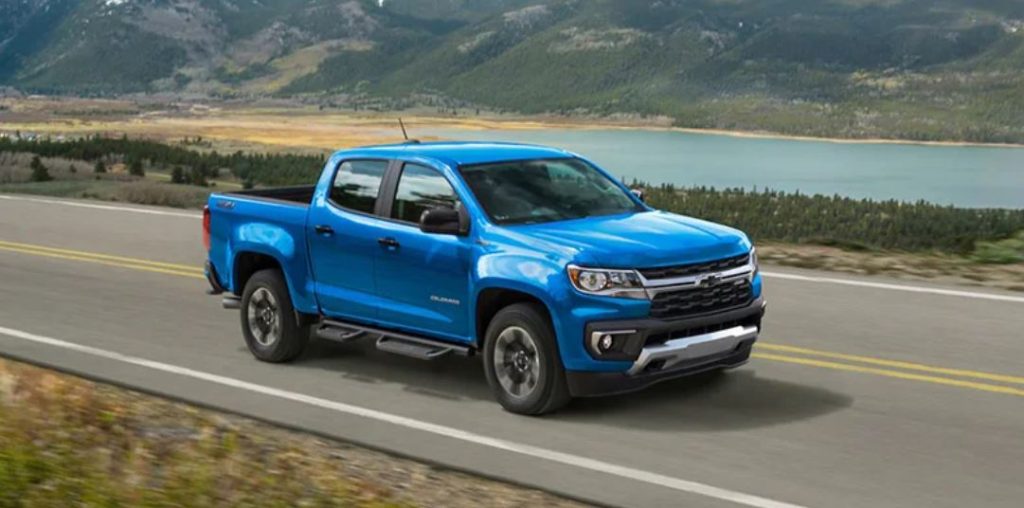
Chevy offers the Chevy Colorad in several trim levels, each targeting different buyer priorities and budgets. The base Work Truck (WT) trim is designed primarily for commercial and fleet use, featuring a more utilitarian interior with vinyl seats and fewer creature comforts. However, even the base model includes modern safety features and reasonable technology, making it a solid choice if you prioritize function over flash and want the most affordable entry point into Colorado ownership. The WT is particularly popular with small business owners and contractors who need a reliable work vehicle without unnecessary frills.
Moving up the trim ladder, Chevy Colorado the LT represents the volume seller and the sweet spot for many buyers. The LT adds cloth seats, more refined interior materials, improved technology features including a larger touchscreen infotainment system, and various convenience options. This is the trim that balances comfort, features, and value most effectively. You can option the LT with various packages to add features like leather seats, upgraded audio systems, advanced safety technologies, and convenience features like remote start and heated seats. Chevy Colorad For most buyers who want a truck for both work and personal use, the LT configured with a few choice options provides everything they actually need.
The Z71 trim is where things get interesting for outdoor enthusiasts and off-road fans. The Z71 package adds off-road-oriented equipment including upgraded suspension with Monotube shocks, skid plates protecting vital undercarriage components, all-terrain tires, locking rear differential, hill descent control, and distinctive exterior styling cues. The Z71 transforms the Colorado from a capable street truck into a genuinely competent off-road machine that can handle trails, dirt roads, and challenging terrain without breaking a sweat. At the top of the range sits the ZR2, which is essentially Chevy Colorado answer to the Ford Ranger Raptor—a seriously capable off-road performance truck with aggressive styling, massive ground clearance, specialized suspension components, and the most powerful engine option as standard equipment.
Interior Quality Technology and Daily Livability
The latest generation Chevy Colorad represents a significant leap forward in interior quality compared to previous versions. Gone are the days when truck interiors were spartan, hard-plastic affairs that felt cheap and utilitarian. The current Colorado features genuinely nice materials on upper trim levels, with soft-touch surfaces, attractive stitching, and design elements that feel more refined than you might expect in a midsize truck. The dashboard layout is logical and driver-focused, with well-placed controls that are easy to operate even while wearing gloves—an important consideration for a work vehicle.
Technology integration has improved dramatically as well. The infotainment system, depending on trim level, features either an 8-inch or 11.3-inch touchscreen running Chevy Colorad latest software interface. The system includes standard Apple CarPlay and Android Auto compatibility (both wireless on higher trims), allowing seamless smartphone integration that most modern buyers consider essential. The interface is reasonably intuitive, though like most touchscreen systems, it requires some familiarization. Physical volume and tuning knobs—which many manufacturers have unfortunately eliminated—remain present, making simple adjustments easy without diving into menus. Available features like wireless charging, multiple USB ports Chevy Colorado and Wi-Fi hotspot capability ensure the Colorado keeps pace with modern connectivity expectations.
Seating comfort and cabin space represent important considerations, especially if you’re planning to use your truck as a daily driver. The front seats in mid and upper trim levels offer good support and comfort for extended driving, with available power adjustments and heating/ventilation on higher trims. The crew cab configuration—which is the most popular and provides four full-size doors—offers genuinely usable rear seating with adequate legroom for adults on shorter trips or comfortable space for kids and car seats. The extended cab configuration, if still available in certain model years, provides occasional rear seating but is less practical Chevy Colorad for regular passenger hauling. Storage solutions throughout the cabin are well-thought-out, with multiple cupholders, door pockets, and storage bins that help keep the cabin organized despite the truck lifestyle’s tendency toward accumulating gear and equipment.
Towing Hauling and Real-World Capability Chevy Colorado
Let’s talk about what the Chevy Colorad can actually do in terms of work capability, because specs on paper only tell part of the story. The maximum towing capacity of 7,700 pounds (when properly equipped with the higher-output engine and appropriate packages) is legitimately useful—this is enough to tow a decent-sized travel trailer, a large boat, a multi-car trailer, or substantial work equipment. However, it’s crucial to understand that maximum towing capacity requires specific configurations and options. Not every Colorado can tow 7,700 pounds, so if towing is a priority, you need to carefully spec your truck with the towing package, appropriate axle ratio, and higher-output engine.
Payload capacity—the amount of weight you can carry in the bed and cabin—ranges from around 1,400 to 1,500 pounds depending on configuration. This is where midsize trucks sometimes disappoint buyers who don’t do their homework, as payload capacity can be surprisingly limited, especially on crew cab four-wheel-drive models with lots of options. Every option you add to the truck (sunroof, bigger wheels, upgraded seats) reduces available payload because the truck itself weighs more. For occasional hauling of mulch, building materials, camping gear, or recreational equipment, the Chevy Colorad payload is perfectly adequate. But if you regularly need to haul a full pallet of materials or extremely heavy cargo, you might find the payload limitations frustrating and should consider a full-size truck instead.
The bed itself, available in both short (5-foot) and long (6-foot) configurations, is well-designed with useful features. Integrated tie-down points, available spray-in bedliner, and optional bed lighting make loading and securing cargo easier. The damped tailgate lowers smoothly rather than slamming down, protecting both the tailgate Chevy Colorado and your fingers. While the bed isn’t as massive as a full-size truck’s, it’s perfectly functional for the majority of tasks most truck owners actually perform. Honestly, most truck beds spend more time hauling air than cargo, and the Colorado’s bed handles weekend projects, camping trips, and occasional work use just fine for the vast majority of buyers.
Off-Road Performance and the Z71/ZR2 Advantage
The Chevy Colorado off-road credentials vary dramatically depending on which version you choose, so understanding the differences is important if trail capability matters to you. The base and LT models with two-wheel drive are essentially street trucks that can handle gravel roads and mild dirt paths but aren’t designed for serious off-road use. Adding four-wheel drive improves capability significantly, providing the traction needed for winter driving, muddy conditions, and moderate off-road situations.
The Z71 package takes things to another level entirely. With its upgraded off-road suspension, all-terrain tires, skid plates, and locking rear differential, the Z71 becomes a genuinely capable off-road machine. The increased ground clearance helps with obstacle navigation, the skid plates protect vital components from rock damage, and the all-terrain tires provide dramatically better traction on loose surfaces than standard highway tires. The hill descent control feature automatically controls speed when descending steep grades, preventing the truck from accelerating dangerously and allowing the driver to focus on steering. For weekend warriors who want to access Chevy Colorado remote campsites, explore forest service roads, or tackle moderately challenging trails, the Z71 provides all the capability most people will ever need.
Then there’s the ZR2, which is in a completely different category. The ZR2 features Multimatic DSSV dampers (the same company that supplies suspension components to racing applications), significantly increased suspension travel, wider track width, aggressive 33-inch tires, front and rear electronic locking differentials, and specifically tuned off-road driving modes. This is a truck designed to tackle genuinely challenging terrain at speed, inspired by desert racing and hardcore off-road competition. The ZR2 can handle situations that would stop most trucks dead—deep sand, rocky trails, severe articulation scenarios, and high-speed desert running. It’s also the most fun version of the Chevy Colorad to drive, with the powerful engine and aggressive suspension creating an engaging, almost sports-car-like experience despite being a pickup truck.
Fuel Economy and Ownership Costs
Fuel economy represents one of the Chevy Colorad key selling points compared to full-size trucks, though it’s important to set realistic expectations. The base 2.7-liter turbocharged engine typically achieves somewhere in the range of 18-20 mpg in city driving and 22-25 mpg on the highway, depending on configuration and driving conditions. Four-wheel drive, larger tires, and heavier option packages all reduce these numbers slightly. The higher-output engine sacrifices a bit of efficiency for the extra power, typically coming in a couple mpg lower across the board.
These numbers might not sound particularly impressive compared to modern cars and crossovers, but context matters. Compared to full-size trucks, the Chevy Colorado generally delivers 3-5 mpg better fuel economy across the board, which translates to meaningful savings over the course of ownership, especially if you drive significant annual mileage. If you’re replacing a full-size truck with a Colorado and your actual utility needs don’t require the larger truck, you could easily save $500-1,000 or more annually in fuel costs. However, if you’re coming from a fuel-efficient sedan or crossover, prepare yourself mentally for the increased fuel expenses that come with truck ownership.
Overall ownership costs for the Chevy Colorad are reasonable within the truck segment. Chevy trucks generally hold their value well, though not quite as strongly as Toyota Tacomas, which command premium resale prices that border on the absurd. Maintenance costs are typical for modern vehicles—oil changes, tire rotations, brake services, and other routine maintenance at recommended intervals. The turbocharged engines require synthetic oil, which is slightly more expensive than conventional oil, but modern service intervals of 7,500-10,000 miles between oil changes mean you’re not changing oil constantly. Reliability for recent model years has been generally good, though as with any vehicle, individual experiences vary and regular maintenance is crucial for longevity.
Final Verdict Is the Chevy Colorado Right for You
The Chevy Colorado makes the most sense for buyers who genuinely need truck capability but don’t want or need the size, cost, and fuel consumption of a full-size pickup. If your typical use case involves weekend projects, occasional towing of moderate-sized trailers, recreational equipment transport, and the flexibility to handle whatever tasks arise, the Colorado delivers all the capability you actually need without the excesses you don’t. It’s also ideal for buyers who want a truck that’s easier to maneuver in urban environments, fits in standard parking spaces without drama, and can serve as a daily driver without feeling like you’re commuting in a tank.
The Chevy Colorad is less ideal if you regularly max out towing and payload capacity, frequently haul full sheets of plywood or other oversized materials, or simply prefer the commanding driving position and substantial presence of a full-size truck. It’s also worth noting that pricing on well-equipped Colorados can approach entry-level full-size truck territory, so the value proposition depends on your specific needs and priorities. If you rarely use actual truck capability but just like the idea of owning a truck, a crossover might serve you better and cost less to operate.
For buyers who fall into the Chevy Colorad sweet spot—needing real capability in a more manageable package—this truck represents an excellent choice that balances practicality, capability, and livability better than almost any competitor. The latest generation has addressed most of the previous model’s shortcomings, delivering a refined, capable, and genuinely desirable truck that proves midsize doesn’t have to mean compromise. Whether you choose a basic work truck, a well-equipped LT, an adventure-ready Z71, or an extreme ZR2, the Chevy Colorado offers a version that can match your specific needs and deliver years of reliable service.