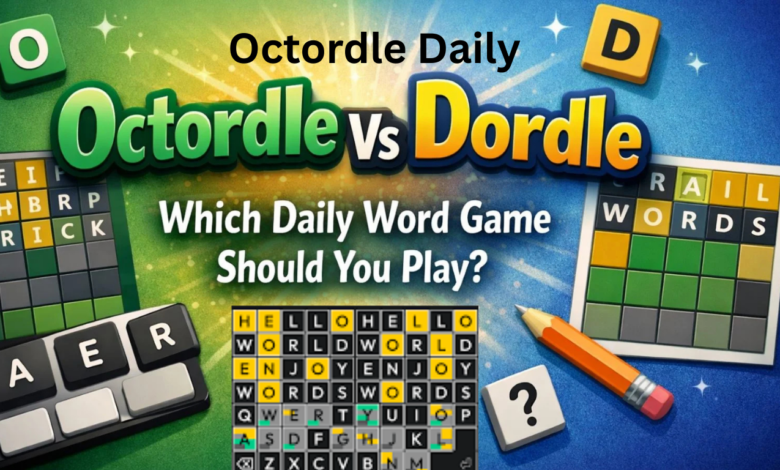
What is Octordle Daily and Why It’s Addictive
Octordle Daily represents the ultimate escalation of the word puzzle phenomenon that started with Wordle. While Wordle challenges you to guess one five-letter word in six attempts, Octordle Daily cranks the difficulty to extreme levels by requiring you to solve eight simultaneous five-letter words in just thirteen guesses. This isn’t a casual puzzle you complete while sipping your morning coffee—it’s an intense mental workout that demands strategy, vocabulary knowledge, and the ability to process multiple problems simultaneously. For word game enthusiasts who found Wordle too simple or got bored with Quordle four-word format, Octordle Daily provides exactly the brain-melting challenge they crave.
The daily format keeps players coming back obsessively. Every day at midnight, a fresh puzzle drops, and word puzzle addicts worldwide tackle the identical eight words, then compare their scores and strategies on social media. There’s something genuinely compelling about knowing thousands of other people are struggling with the exact same puzzle you’re working on right now. This shared experience creates community among players who discuss particularly difficult puzzles, share their results using the spoiler-free colored emoji format, and collectively groan when an obscure word appears that stumps everyone.
What makes Octordle Daily fascinating from a game design perspective is how it fundamentally transforms the Wordle formula. Wordle is about focused deduction on a single target, but Octordle becomes an exercise in information management and strategic efficiency. You cannot afford to waste guesses on words that only help with one or two of the eight puzzles—every guess must work across as many words as possible. This shift from single-target optimization to multi-target efficiency creates an entirely different strategic game, feeling fresh even if you’ve played thousands of Wordle rounds.
Understanding the Rules and Basic Gameplay Mechanics
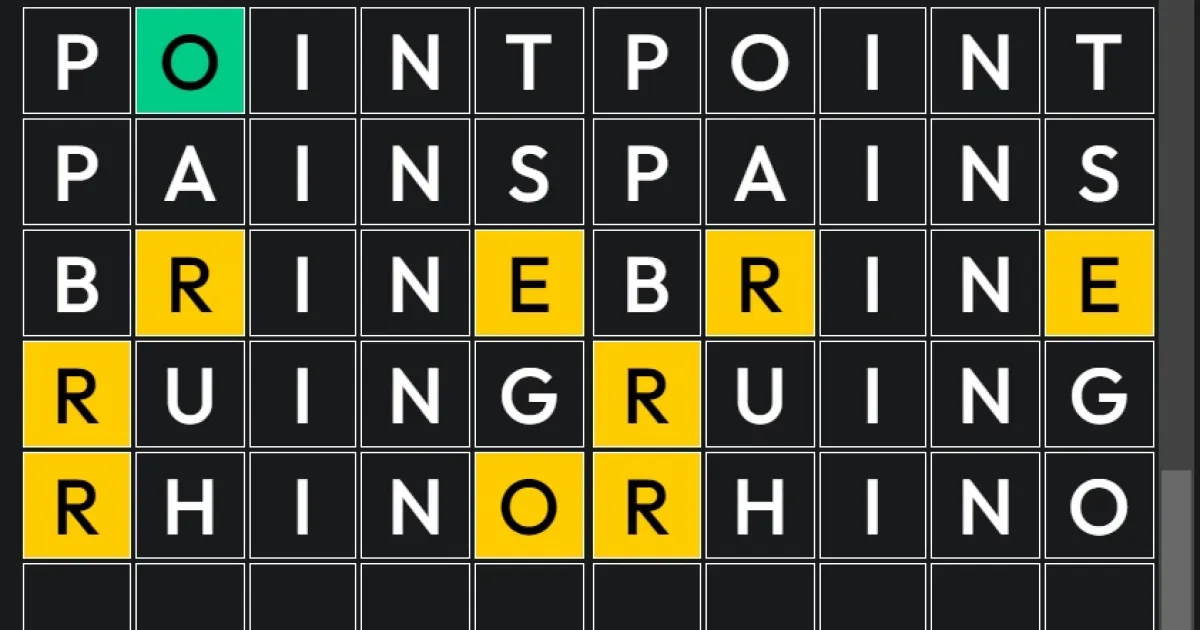
The fundamental rules mirror Wordle’s beloved color-coded feedback system, applied across eight separate grids simultaneously. When you enter a five-letter word guess, Octordle Daily that identical word applies to all eight puzzles at once, with each grid providing independent feedback: green letters are correct and properly positioned, yellow letters exist in the word but are misplaced, and gray letters don’t appear in that word at all. This simultaneous feedback across eight grids creates overwhelming information, especially during early guesses when you’re establishing patterns across multiple puzzles.
You receive thirteen total guesses to solve all eight words, which sounds generous until you calculate that two guesses per word would require sixteen guesses total—making thirteen actually quite tight. The puzzle doesn’t require solving words in any particular order, allowing you to focus remaining guesses on whichever unsolved words you prefer once you’ve completed some puzzles. This creates interesting strategic decisions about whether to solve words opportunistically as they become obvious or continue gathering broad information across all remaining unsolved words.
The interface displays all eight grids simultaneously, typically arranged in Octordle Daily a 2×4 grid pattern. After each guess, you must quickly scan all eight grids to absorb the color-coded feedback and plan your next move. This information processing challenge represents part of the puzzle’s difficulty—experienced players develop rapid pattern recognition abilities, instantly identifying which words need attention and what letter patterns are emerging. New players often feel overwhelmed by sheer information volume on screen, but this cognitive load decreases dramatically with practice as pattern recognition becomes automatic.
Developing Winning Starting Word Strategies
Your starting word choices in Octordle Daily represent perhaps the most critical strategic decision you’ll make, differing significantly from optimal Wordle strategy. In Wordle, you might start with CRANE or SLATE to maximize common letters and vowels. In Octordle, your first 2-3 guesses should be carefully chosen to cover maximum alphabet territory across common letters, providing information about all eight puzzles simultaneously. Many experienced players use consistent opening sequences of words collectively covering high-frequency letters without unnecessary repetition.
A popular approach uses starting words covering all five vowels plus the most common consonants. For example, the sequence AUDIO, STERN, and LYMPH collectively employs fifteen different letters including all vowels and frequent consonants like R, S, T, L, and N. This systematic approach ensures that after just three guesses, you possess information about fifteen letters across all eight puzzles, dramatically narrowing possibilities. The trade-off is these initial guesses might not solve any words outright, but they provide the informational foundation making efficient solving possible in later guesses.
Some players prefer more opportunistic approaches, starting with common five-letter words and pivoting based on feedback rather than following rigid opening sequences. This flexibility occasionally leads to solving one or two puzzles very quickly through lucky early guesses, but can also leave you with less systematic alphabet coverage. Experimenting with different starting strategies and discovering what works for your cognitive style is part of Octordle Daily appeal—there’s no single “correct” approach, and developing your personal system over time becomes part of the enjoyment.
Advanced Tactics for Managing Multiple Puzzles Simultaneously
Once you’ve completed opening moves and gathered initial information, Octordle Daily real challenge begins: efficiently managing information across eight puzzles while making guesses advancing multiple words toward solutions simultaneously. Expert players develop abilities to identify which puzzles have converged toward obvious solutions and which still need more information. The critical decision point arrives around guesses 6-8, where you must decide whether to start committing guesses to solving specific words you’re confident about or continue making broadly informative guesses across all remaining puzzles.
Letter frequency analysis becomes crucial during middle game play. If you’ve identified that six of your eight puzzles contain the letter R, subsequent guesses should probably include R in different positions to narrow down its location in each word. Similarly, if you’ve eliminated common letters like E, A, R, S, T from several puzzles, you know those words likely contain less common letters like W, Y, K, X, or Q, which should influence your guessing strategy. This contextual reasoning—using knowledge about some puzzles to inform approaches to others—separates competent Octordle Daily players from struggling ones.
Pattern recognition accelerates dramatically with consistent practice. Common letter combinations like -ING, -TION, -ED, or starting patterns like BR-, ST-, TH- become instantly recognizable when you see appropriate colors in proper positions. Experienced players can often intuit complete words with just 2-3 correct letters because they recognize patterns from thousands of previous five-letter words they’ve encountered. Building this mental database of five-letter word patterns takes time and consistent play, but represents perhaps the single most valuable skill for Octordle success beyond merely possessing a large vocabulary.
Common Mistakes and How to Avoid Octordle Daily Them
One of the most common mistakes Octordle players make is focusing too heavily on individual puzzles too early. When you’ve narrowed down a word to three or four possibilities, it’s tempting to start burning guesses trying to solve it, but this often leaves insufficient guesses for remaining words. A better approach delays solving obvious words until later guesses, instead using middle guesses to gather information about puzzles you’re still uncertain about. Those easy words aren’t going anywhere—solve the tricky ones first while you have guesses to spare.
Tunnel vision on difficult puzzles can doom entire attempts. Sometimes you’ll encounter one or two puzzles that seem impossibly difficult—you’ve eliminated numerous letters but still cannot figure out what the word could possibly be. It’s easy to obsess over these difficult puzzles, but if you have other puzzles one or two guesses away from completion, Octordle Daily prioritize those first. Every solved puzzle removes one grid from your mental workload, reducing cognitive burden and making remaining puzzles easier to manage. That difficult word stumping you might become obvious once you’ve solved three or four others and can focus full attention on it.
Letter elimination errors become more likely in Octordle Daily simply because you’re tracking so much information across eight grids. You might remember that E was gray in puzzle three but accidentally include it in a guess for that puzzle anyway, wasting that attempt. Or you might place a yellow letter in the same position where it previously appeared yellow, which tells you nothing new. These mental tracking errors are inevitable to some degree, but you can minimize them by double-checking before submitting each guess—scan across relevant grids to confirm your guess actually makes sense given what you’ve learned.
Tracking Progress and Long-Term Improvement
Octordle provides statistics tracking that monitors your performance over time, including solve percentage, current streak, and guess distribution. These stats become surprisingly motivating—maintaining a long streak creates genuine investment in playing carefully and thoughtfully rather than making careless guesses. Your solve percentage indicates how often you successfully solve all eight words within thirteen guesses, and watching this percentage climb as you improve feels genuinely rewarding.
The guess distribution shows how many guesses you typically need to solve all eight words, with most competent players averaging somewhere between 9-12 guesses. As you develop better strategies and improve pattern recognition, you should see this distribution shift toward fewer guesses needed. Players consistently solving in 8-9 guesses operate at very high levels, demonstrating excellent opening strategies and efficient information gathering.
Beyond official statistics, many dedicated players maintain personal records or participate in online communities where people share daily scores. Social media platforms host Octordle Daily communities where players post results using the spoiler-free colored square format, discuss particularly difficult puzzles, and share strategy tips. Engaging with these communities accelerates improvement by exposing you to different strategic approaches and helping you understand why certain puzzles were harder than others, transforming Octordle Daily from a solitary puzzle into a shared global challenge.