Prince Rupert Drop The Astonishing Glass Phenomenon That Defies Physics and Inspires Scientific Curiosity

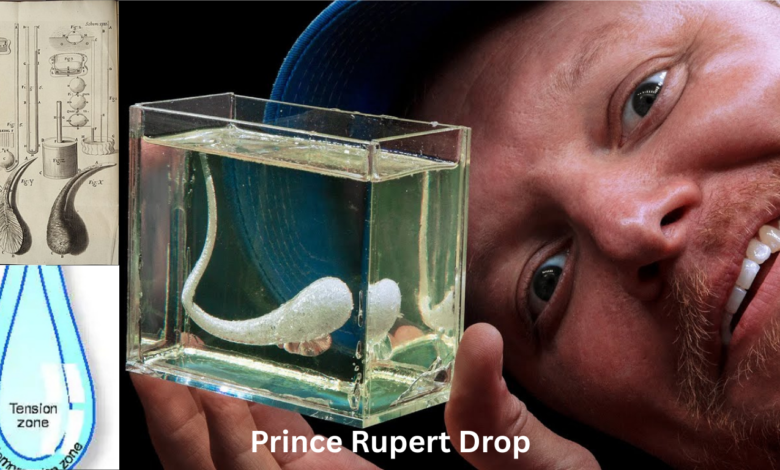
Prince Rupert Drop when people search for “Prince Rupert drop,” they are often fascinated by the unusual combination of strength and fragility that defines these remarkable glass objects. A Prince Rupert drop is a teardrop-shaped piece of glass that can withstand extraordinary force at its bulbous head while being so fragile at its tail that a simple nick can cause it to explode entirely. This paradoxical behavior has intrigued scientists, glassmakers, and educators for centuries, making it both a scientific marvel and a captivating demonstration of physics in action.
In this article, we will explore the history, structure, physics, applications, and cultural impact of the Prince Rupert drop. Written in a casual but expert tone, this article explains why these small glass objects have a massive influence on both scientific education and popular curiosity.
The Origins of the Prince Rupert Drop
The story of the Prince Rupert drop begins in the 17th century, during a time when glassmaking was both an art and a scientific pursuit. These drops were first brought to England by Prince Rupert of the Rhine, after whom the objects are named. Prince Rupert presented them to King Charles II, and their unusual properties quickly fascinated the court and the scientific community.
Made by dripping molten glass into cold water, the resulting teardrop-shaped drops rapidly cool and harden. This process gives the drop its unique combination of extreme durability at the head and extreme fragility at the tail. The sudden cooling process, known as quenching, creates a complex system of internal stresses that is critical to the drop’s behavior.
Historically, Prince Rupert drop became both scientific curiosities and conversation pieces in the royal courts of Europe. Their ability to withstand hammer blows at the bulbous end while shattering explosively when the tail was damaged made them a demonstration of both the artistic skill of glassmakers and the underlying principles of physics.
The Structure and Formation of a Prince Rupert Drop
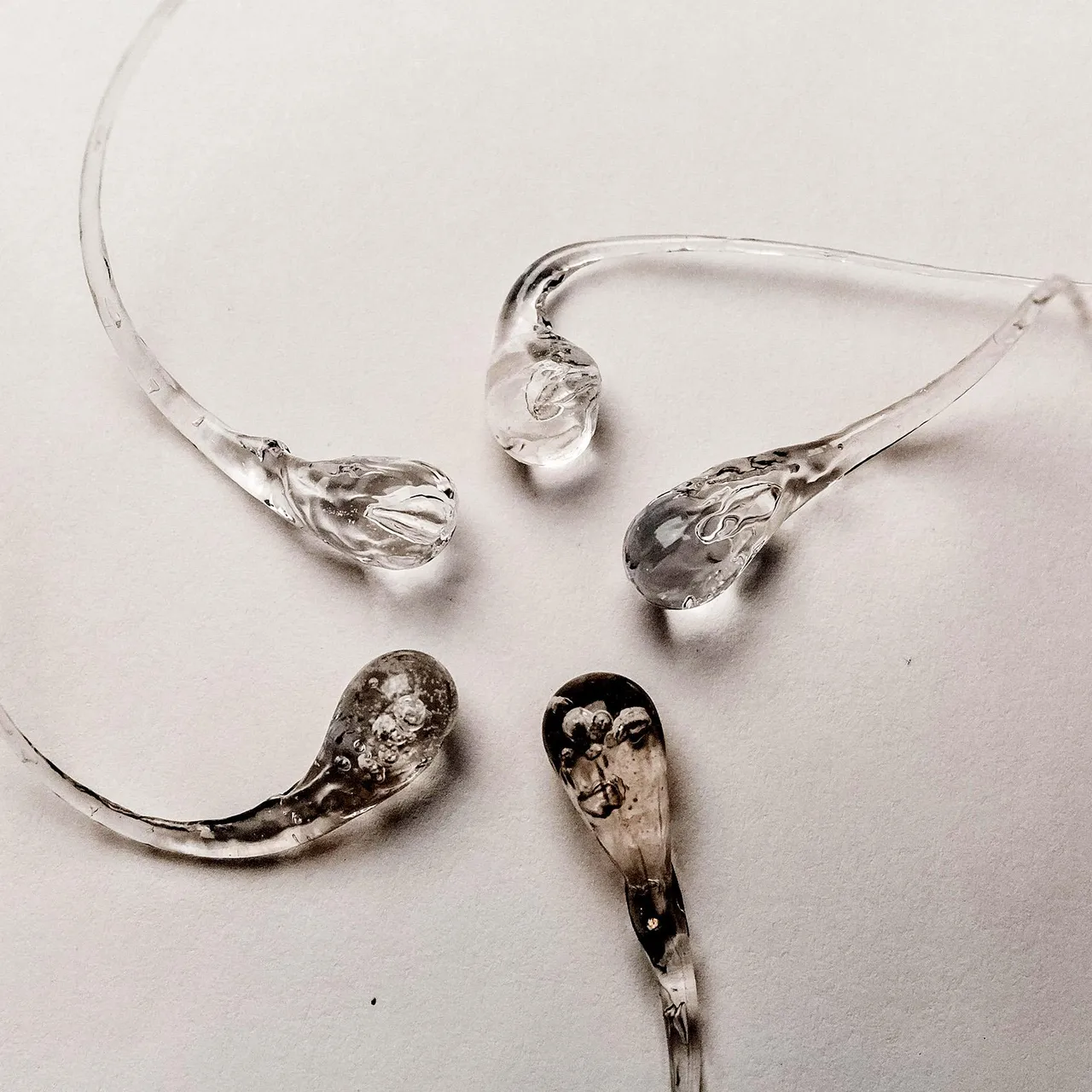
A Prince Rupert drop begins as molten glass heated to temperatures exceeding 1,400 degrees Celsius. The glassmaker then allows a small globule of molten glass to drip into a bucket of cold water. The outer layer solidifies almost immediately, while the interior remains molten for a short period, continuing to contract as it cools.
This rapid cooling creates a unique structure of compressive and tensile stresses. The surface experiences high compressive stress, making it incredibly strong and resistant to breaking. Meanwhile, the interior undergoes tensile stress, storing potential energy that contributes to the explosive shattering when the tail is damaged.
The teardrop shape is essential to the drop’s behavior. The bulbous head is designed to withstand direct pressure, while the thin tail acts as a trigger for releasing the stored energy. This structure exemplifies the intricate interplay between material science and geometry, illustrating how small variations in shape and cooling conditions dramatically affect the physical properties of materials.
Physics Behind the Explosive Fragility
The physics of a Prince Rupert drop is both fascinating and counterintuitive. At the head, the compressive stresses make the glass capable of withstanding forces up to several thousand pounds per square inch, far beyond what ordinary glass could endure. This is why a hammer blow can fail to break the head.
However, the tail contains concentrated tensile stress. Even a small nick or crack in the tail releases the stored energy in the interior of the drop, causing a rapid chain reaction of fractures. The result is an almost instantaneous explosion of the entire drop into fine powder, demonstrating principles of stress propagation and energy release.
Scientists and educators often use Prince Rupert drop to explain these concepts in materials science and physics. The drops provide a tangible, visual example of stress distribution, internal energy, and fracture mechanics, making abstract physics concepts accessible and engaging.
Modern Scientific Investigations
In recent decades, Prince Rupert drop have become a focus of experimental physics. Researchers use high-speed cameras and computer simulations to study how fractures propagate within the glass. These studies have helped scientists understand not only glass behavior but also broader principles of stress, elasticity, and material failure.
For example, studies using synchrotron X-rays allow researchers to visualize the internal stresses of the drop without breaking it. Such investigations contribute to advancements in materials science, particularly in designing stronger, safer glasses and ceramics. The lessons learned from Prince Rupert drop even influence aerospace, engineering, and construction materials, where understanding stress distribution is critical.
Moreover, the drops continue to inspire creative experiments in physics education. High-speed video demonstrations showing the dramatic shattering of the drops provide a compelling way to engage students and illustrate the power of internal stresses in brittle materials.
Applications and Cultural Significance Prince Rupert Drop
While Prince Rupert drop are primarily educational and experimental today, they have historically held symbolic and entertainment value. Their unique behavior made them a popular curiosity in museums, science demonstrations, and private collections.
The drops also serve as metaphors in popular culture for resilience and vulnerability. The paradox of being incredibly strong yet fragile resonates beyond physics, often used in literature, philosophy, and even business to illustrate the delicate balance between stability and risk.
In scientific contexts, Prince Rupert drop have informed the study of tempered glass and other materials designed to resist impact. They also inspire artists and glassmakers seeking to combine beauty with unusual physical properties. This blend of science and artistry ensures the drop’s continued relevance in both cultural and academic settings.
Safety Considerations Prince Rupert Drop
Despite their small size, Prince Rupert drop can be dangerous due to their explosive nature. Educators and experimenters must handle them with care, especially when demonstrating the shattering process. Protective equipment, controlled environments, and appropriate safety measures are essential to prevent injuries.
The explosive shattering provides a dramatic illustration of physics but must always be conducted responsibly. Proper handling also ensures that the educational value of the drops is preserved without unnecessary risk.
Lessons From the Prince Rupert Drop
The Prince Rupert drop teaches valuable lessons about science, engineering, and creativity. First, it demonstrates the impact of material stresses on physical properties, showing how forces can be both contained and released depending on structure and composition.
Second, it highlights the importance of experimental curiosity. Glassmakers in the 17th century inadvertently created a sophisticated physical experiment, showing how observation and experimentation can lead to enduring scientific insights.
Finally, the drop reminds us of the balance between strength and fragility. In both materials and life, resilience often coexists with vulnerability, and understanding this balance can lead to better design, strategy, and decision-making.
Final Thoughts
The Prince Rupert drop is a small but extraordinary example of the wonders of science. Its unique combination of strength and fragility continues to captivate both scientists and the public, serving as a tool for education, research, and inspiration.
From its origins in 17th-century glassmaking to modern applications in materials science, the drop remains a testament to the intersection of creativity, physics, and human curiosity. By studying these tiny teardrops of glass, we gain insight into complex concepts of stress, energy, and fracture, while also appreciating the historical ingenuity of early scientists and artisans.
In the end, the Prince Rupert drop is more than just a scientific curiosity—it is a symbol of the surprising complexity hidden within simple materials, reminding us that even a tiny object can reveal profound lessons about the natural world.