Introduction to Scapulohumeral Rhythm
Scapulohumeral Rhythm If you’ve ever lifted your arm to wave, throw a ball, or grab something from a high shelf, you’ve put your scapulohumeral rhythm to work—whether you realized it or not. This term might sound overly technical, but it simply refers to the way your shoulder blade (scapula) and upper arm bone (humerus) move together whenever you raise your arm.
What makes scapulohumeral rhythm so fascinating is how much it impacts everyday life. Without this coordinated motion, your shoulder would quickly become stiff, painful, and limited. In fact, many common shoulder injuries—like impingement or rotator cuff problems—stem from rhythm disruptions.
So, while it might sound like something only physical therapists or anatomy professors care about, the truth is that scapulohumeral rhythm affects everyone. From athletes to office workers, understanding this concept can mean the difference between strong, pain-free shoulders and years of nagging discomfort.
What is Scapulohumeral Rhythm?

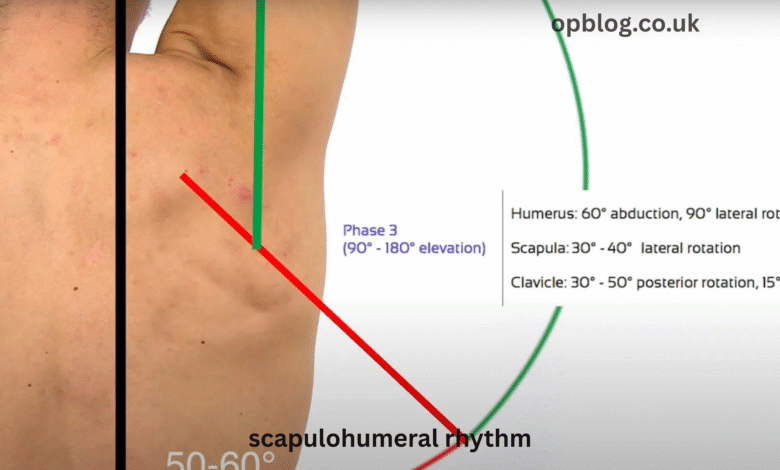
Scapulohumeral Rhythm is the natural coordination between the humerus (upper arm bone) and the scapula (shoulder blade) when you raise your arm. The classic ratio often used to describe it is 2:1—for every 3 degrees of arm elevation, 2 degrees come from the humerus and 1 degree comes from the scapula.
That ratio matters because it keeps your shoulder joint stable and functional. If the humerus were to move without scapular support, the ball-and-socket joint could jam, soft tissues could be pinched, and your range of motion would be severely limited. The scapula acts like a dance partner, gliding and rotating so the humerus can move freely.
It’s also worth noting that scapulohumeral rhythm isn’t rigid. Depending on what you’re doing—like lifting weights, swimming, or simply reaching overhead—the ratio can vary slightly. The body is adaptable, and the rhythm changes just enough to match the demand of the task at hand.
Why Does Scapulohumeral Rhythm Matter?
The importance of scapulohumeral rhythm can’t be overstated. At its core, it ensures that your shoulders move efficiently, safely, and without unnecessary strain. Let’s break down why it’s so vital.
First, rhythm prevents injuries. When the scapula doesn’t rotate properly, the humerus can pinch tendons and ligaments inside the shoulder joint. This often leads to shoulder impingement, one of the most common shoulder conditions seen in athletes and desk workers alike. Proper rhythm gives those structures enough space to move freely.
Second, rhythm plays a huge role in performance. Think about throwing a baseball or serving in tennis—those movements require smooth coordination between your scapula and humerus. If the rhythm is off, not only will the movement feel awkward, but you’ll also lose strength and efficiency.
Finally, scapulohumeral rhythm affects posture and long-term shoulder health. Poor rhythm usually means some muscles are overworking while others are underactive. Over time, this imbalance can lead to rounded shoulders, stiffness, and chronic pain. By maintaining good rhythm, you’re essentially future-proofing your shoulders.
Common Problems with Scapulohumeral Rhythm
Unfortunately, scapulohumeral rhythm doesn’t always function the way it should. There are several issues that can disrupt this natural movement pattern, and they’re more common than you might think.
One of the biggest culprits is muscle imbalance. If the muscles that stabilize your scapula—like the serratus anterior or lower trapezius—are weak, your scapula won’t rotate or tilt correctly. Instead, stronger but less efficient muscles take over, which often leads to faulty movement patterns.
Another common issue is shoulder impingement. This occurs when the humerus moves upward without enough scapular rotation, squeezing the tendons of the rotator cuff. If you’ve ever felt sharp pain lifting your arm overhead, impingement might be to blame.
Finally, injuries or surgeries can throw rhythm out of sync. Rotator cuff tears, labral injuries, or shoulder dislocations often leave the scapula and humerus struggling to work together. That’s why physical therapy for shoulder rehab almost always includes exercises to retrain scapulohumeral rhythm.
How to Recognize Poor Rhythm
So how do you know if your scapulohumeral rhythm is off? The signs are usually pretty noticeable once you know what to look for.
The most obvious red flag is pain during overhead movement. If you feel pinching, stiffness, or a sharp catch when raising your arm, it could mean your scapula isn’t rotating properly. Pain isn’t always a guarantee of rhythm problems, but it’s often a strong clue.
Another sign is winging of the scapula. This happens when the shoulder blade sticks out awkwardly instead of gliding smoothly along the ribcage. It’s usually caused by weak stabilizing muscles and is a clear sign that rhythm needs work.
Finally, limited range of motion can be a giveaway. If you struggle to lift your arm fully overhead without compensating with your spine or neck, chances are your scapulohumeral rhythm isn’t functioning properly.
Exercises to Improve Scapulohumeral Rhythm
The great news is that you can absolutely improve scapulohumeral rhythm through targeted exercises. The key is to strengthen the right muscles while teaching the scapula and humerus to move in sync.
One excellent exercise is the scapular push-up. Unlike a regular push-up, this move emphasizes scapula protraction and retraction. It strengthens the serratus anterior, which plays a vital role in upward rotation of the scapula.
Another go-to exercise is the wall slide. Standing with your back against the wall, you slide your arms upward while focusing on keeping the scapula engaged. This helps retrain upward rotation and also improves mobility in your thoracic spine, which supports scapular movement.
Finally, face pulls using a band or cable machine are fantastic for the rear delts, rhomboids, and lower trapezius. These muscles stabilize the scapula during dynamic movements, preventing it from tipping forward or rotating incorrectly.
Scapulohumeral Rhythm in Sports and Fitness
Athletes, especially those in overhead sports, rely heavily on proper scapulohumeral rhythm. Think of volleyball players spiking, swimmers reaching forward, or basketball players shooting a three-pointer. In all these cases, the scapula and humerus must move as a team.
When rhythm is off, athletes not only lose performance but also become prone to injury. A pitcher with poor rhythm might lose velocity on their throws, while a swimmer may experience nagging shoulder pain that slows them down. Even recreational gym-goers can struggle if they press or lift overhead without proper coordination.
This is why coaches and trainers often include scapular stability exercises in strength programs. By focusing on rhythm early, athletes can maximize performance while reducing the risk of shoulder breakdowns.
The Role of Posture in Scapulohumeral Rhythm
Posture plays a huge role in how well scapulohumeral rhythm works. In today’s world, where we spend hours hunched over computers and phones, it’s no surprise that posture-related rhythm issues are on the rise.
When your shoulders round forward, the scapula shifts into a poor resting position. This makes it harder for it to rotate upward when you raise your arm. Over time, this creates stiffness, weakness, and discomfort in the shoulder joint.
Improving posture doesn’t just make you look more confident—it also restores healthy scapulohumeral rhythm. Simple changes like sitting tall, stretching tight chest muscles, and strengthening the upper back can dramatically improve shoulder mechanics.
Conclusion
Scapulohumeral rhythm might sound like a technical, medical term, but at the end of the day, it’s just your shoulder’s way of keeping movement smooth and pain-free. This coordinated dance between the scapula and humerus is essential for everything from daily tasks to peak athletic performance.
When rhythm is disrupted, problems like impingement, poor posture, and injuries are quick to follow. But with awareness, assessment, and the right exercises, you can restore balance and keep your shoulders strong and mobile.
So, next time you lift your arm overhead, remember—it’s not just your arm moving. It’s a carefully choreographed partnership between your scapula and humerus. And when they move in sync, your entire body benefits.