Matildas The Rise Legacy and Global Impact of Australia Iconic Women’s Football Team

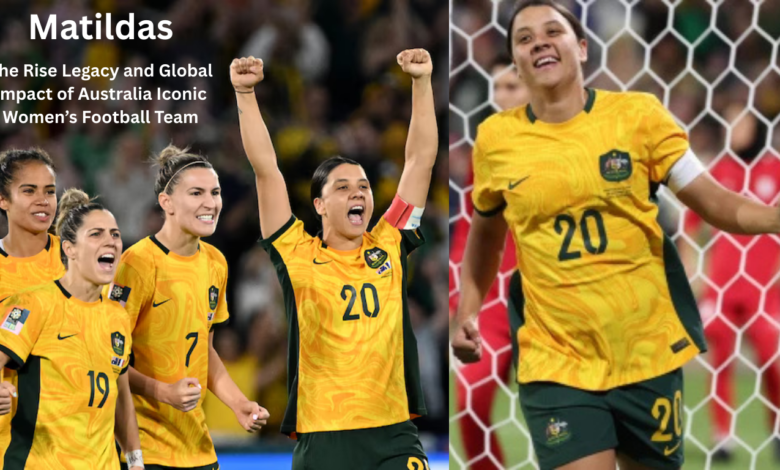
Matildas when people talk about the evolution of women’s football, one team that consistently enters the conversation is the Matildas. Officially known as the Australia women’s national soccer team, the have grown from a developing national squad into one of the most recognized and respected teams in global football.
Their journey is not just about trophies or rankings. It is about cultural transformation, visibility for women’s sport, and redefining how a nation supports its female athletes. From early struggles for recognition to record-breaking crowds and global superstars, the Matildas represent more than a team—they represent a movement.
In this comprehensive guide, we will explore their history, playing style, major tournaments, key players, and the lasting impact they have made both in Australia and worldwide.
The Origins of the Matildas Building a Foundation for Women’s Football in Australia
The Matildas story begins long before packed stadiums and prime-time television broadcasts. Women’s football in Australia faced limited funding, minimal media coverage, and structural challenges in its early years. Despite these obstacles, the national women’s team was officially established in 1978.
In those early decades, the squad lacked the infrastructure that modern players benefit from today. Travel conditions were basic, sponsorship opportunities were limited, and many players balanced football with full-time jobs or studies. However, what they lacked in resources, they made up for in determination.
The team’s nickname, was adopted in 1995 and inspired by the famous Australian folk song “Waltzing Matilda.” The name symbolizes national pride and resilience—two qualities that have consistently defined the team’s identity. Over time, the Matildas became more than just representatives of Australia; they became pioneers for women’s sport across the country.
Breakthrough Moments on the World Stage

The Matildas have competed in multiple editions of the FIFA Women’s World Cup, steadily building their international reputation. While early appearances were primarily developmental experiences, the team gradually evolved into a genuine contender.
One of their most defining moments came during the 2015 World Cup, when they reached the quarterfinals and demonstrated that they could compete with traditional powerhouses. Their tactical discipline, speed in transition, and technical precision earned them global respect.
The 2023 World Cup, co-hosted by Australia, elevated the Matildas to an entirely new level of prominence. The nation rallied behind the team in unprecedented fashion. Record-breaking attendance figures, soaring television ratings, and nationwide celebrations highlighted just how deeply the had embedded themselves in Australia’s sporting culture. Even without lifting the trophy, their performance reshaped the landscape of women’s football in the region.
Tactical Identity What Makes the Matildas So Competitive
From a technical perspective, the Matildas are known for their dynamic attacking approach and tactical flexibility. Over the years, they have adapted to modern football trends while maintaining a distinct identity built on pace and intelligent movement.
One key strength is their ability to transition quickly from defense to attack. The team excels at exploiting space, especially through the wings, and often uses direct, high-tempo build-up play to unsettle opponents. This style requires both fitness and tactical awareness, qualities that have become hallmarks of the squad.
Defensively, the Matildas emphasize structured positioning and coordinated pressing. They do not rely solely on individual brilliance; instead, they operate as a cohesive unit. This balance between structured defense and creative attack is what allows them to compete consistently against top-ranked teams.
Star Power and Leadership The Influence of Sam Kerr and Beyond
No discussion about the Matildas would be complete without mentioning Sam Kerr. As one of the most recognizable names in women’s football, Kerr has played a transformative role in elevating the team’s global profile.
Her goal-scoring ability, aerial dominance, and fearless playing style have made her one of the most prolific forwards in the world. Beyond statistics, Kerr embodies confidence and authenticity. Her leadership extends beyond the pitch, inspiring young athletes across Australia and beyond.
However, the Matildas are not a one-player team. Their success stems from depth and collective strength. Veteran defenders, creative midfielders, and emerging talents all contribute to a well-rounded squad. Leadership within the team is shared, fostering a culture of accountability and mutual respect.
This balanced dynamic ensures that even when key players face injuries or challenges, the team remains resilient and competitive.
Cultural Impact Changing the Narrative Around Women’s Sport
The Matildas have done something extraordinary—they have changed how Australia views women’s football. Historically, women’s sports often struggled for equal funding, coverage, and recognition. The consistent performances have forced a national shift in perspective.
Young girls now see professional pathways that were once unimaginable. Grassroots participation in football has surged, driven largely by the visibility and success of the national team. Sponsorship deals and broadcasting agreements have expanded, creating sustainable growth opportunities for the sport.
Moreover, the Matildas have become symbols of empowerment. They represent diversity, inclusivity, and perseverance. Their influence extends into conversations about equality in pay, facilities, and media representation.
This cultural ripple effect is perhaps even more significant than any tournament finish.
Challenges and Pressure in the Modern Era
With success comes expectation. As the Matildas’ profile has grown, so has the pressure to perform consistently at the highest level. Fans now expect deep runs in major tournaments, and media scrutiny has intensified.
Managing this pressure requires mental resilience. International football calendars are demanding, and players often balance club commitments abroad with national team duties. Injuries, travel fatigue, and tactical adjustments are constant challenges.
However, the team’s leadership and coaching staff have emphasized mental preparation and squad rotation strategies. Modern sports science and analytics play a significant role in maintaining performance levels.
The Matildas have shown that they can handle pressure environments, particularly during home tournaments, where expectations are amplified. This ability to perform under scrutiny distinguishes elite teams from developing ones.
The Future of the Matildas Sustainability and Global Ambition
Looking ahead, the future of the Matildas appears bright. Investment in youth academies and domestic leagues is strengthening the talent pipeline. Emerging players are gaining international experience earlier in their careers, ensuring continuity and long-term competitiveness.
Australia’s domestic competitions are becoming more professionalized, providing structured pathways from grassroots to elite levels. This foundation supports sustained success rather than short-term peaks.
Globally, women’s football is expanding rapidly. Competition is intensifying, with nations investing heavily in development programs. For the Matildas to maintain their elite status, they must continue evolving tactically and strategically.
The good news is that the team has already demonstrated adaptability. Their willingness to innovate, combined with a strong cultural identity, positions them well for future challenges.
Why the Matildas Matter Beyond Football
At its core, the Matildas’ significance extends far beyond the pitch. They represent progress, unity, and the power of collective belief. In a country passionate about sport, they have carved out a space that commands equal respect and admiration.
Their journey reminds us that growth in sport mirrors growth in society. When opportunity meets determination, transformation follows. The Matildas have not only elevated women’s football in Australia—they have reshaped national conversations about equality, visibility, and ambition.
From humble beginnings to global recognition, the story is one of perseverance and vision. They are no longer just participants on the world stage; they are contenders, role models, and trailblazers.
And if their trajectory over the past decade is any indication, the best chapters of their story are still yet to be written.