Chrome Music Lab has always been a universal language, and technology has made it more accessible than ever. One innovative platform making waves in music education and experimentation is Chrome Music Lab. Developed by Google, this platform allows users of all ages to explore musical concepts, create compositions, and experiment with sound in an interactive and intuitive way.
This article provides a comprehensive look at Chrome Music, highlighting its features, educational value, creative potential, and why it has become a favorite tool for educators, students, and music enthusiasts.
What is Chrome Music Lab
Chrome Music Lab is an online platform designed to make music creation and learning accessible to everyone. It combines the power of modern web technology with creative exploration, offering a variety of interactive experiments that teach musical concepts in a playful manner.
The platform is free to use and works directly in web browsers, requiring no downloads or installations. Its user-friendly interface makes it easy for beginners to start experimenting with sound while also offering deeper layers for more advanced users.
At its core, Chrome Music Lab aims to break down the barriers to music education. By providing hands-on, visual, and interactive experiences, it helps users understand rhythm, melody, harmony, and more without needing formal training.
Key Features of Chrome Music Lab

One of the most appealing aspects of Chrome Music Lab is the variety of experiments it offers. Each experiment focuses on a specific musical concept and allows users to engage directly with sound.
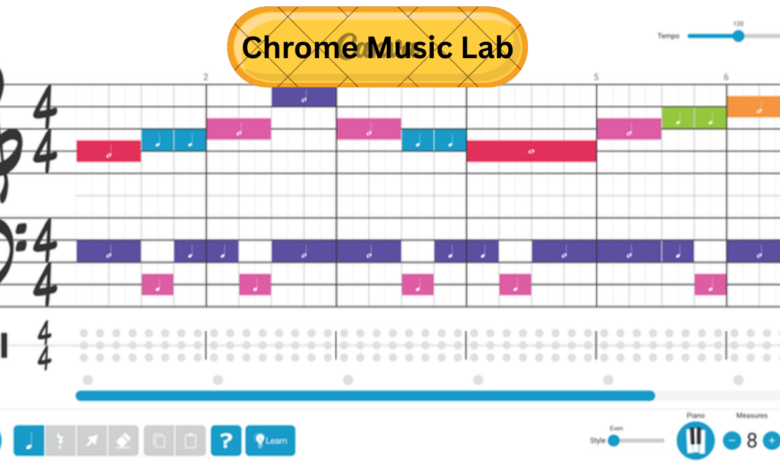
For example, the Song Maker experiment lets users create their own tunes by placing notes on a grid, adjusting rhythm and pitch. The Rhythm experiment teaches users about beats and timing, while the Spectrogram experiment visualizes sound waves in real time, making abstract concepts more tangible.
Other features include the Voice Spinner, which lets users manipulate recorded sounds, and the Kandinsky experiment, which transforms drawings into music. These diverse tools encourage creativity while reinforcing musical theory in a fun, interactive way.
Educational Benefits
Chrome Music Lab is particularly valuable in educational settings. Teachers use the platform to introduce students to music fundamentals in an engaging and interactive manner.
By exploring experiments like Rhythm and Melody, students can understand timing, pitch, and harmony without the need for traditional instruments. This hands-on approach caters to visual and kinesthetic learners, making music more approachable.
Additionally, Music Lab fosters critical thinking and creativity. Students learn to experiment, problem-solve, and understand cause-and-effect relationships in music, building skills that extend beyond the classroom.
How to Use Chrome Lab
Using Chrome Music Lab is straightforward. Users simply visit the website, select an experiment, and begin exploring. Each experiment provides instructions and visual cues to guide interaction.
For beginners, Song Maker or Rhythm is an excellent starting point. Users can create simple compositions, adjust tempo, and play back their creations instantly. More advanced experiments allow for experimentation with sound visualization, frequency, and waveform manipulation.
The platform encourages experimentation without the fear of making mistakes. Users can freely explore musical ideas, undo changes, and test new combinations, fostering a supportive learning environment.
Creative Applications
Beyond education, Chrome Music Lab serves as a creative tool for musicians, artists, and hobbyists. Its experiments provide a space to prototype ideas, explore new sounds, and generate unique compositions.
For digital musicians, Music Lab can serve as a quick sketchpad to test melodies or rhythms before transferring them to professional software. Artists can also use it to create interactive installations, combining music with visual elements for immersive experiences.
This versatility makes Chrome Music Lab not just an educational platform, but a playground for anyone interested in experimenting with sound and music creation.
Accessibility and User Experience
One of the strengths of Chrome Music Lab is its accessibility. The platform is web-based, lightweight, and designed to run smoothly on various devices, including tablets, laptops, and smartphones.
Its intuitive interface ensures that users of all ages and skill levels can engage without prior experience. Visual feedback, clear instructions, and responsive interactions make learning and experimenting enjoyable.
Furthermore, Chrome Music Lab requires no sign-up or subscription, making it accessible to schools, parents, and individual users worldwide, regardless of resources or technical knowledge.
Integration in Schools and Classrooms
Many educators have incorporated Chrome Music Lab into their teaching methods. Music teachers use it to supplement traditional lessons, allowing students to explore concepts like rhythm, chord progressions, and sound synthesis interactively.
Classroom activities can include collaborative music projects, composition challenges, and interactive demonstrations of musical theory. also supports STEM education by demonstrating the science of sound, connecting math, physics, and technology to creative learning.
This integration has made Chrome Music Lab a valuable tool in modern music education, offering both theoretical and practical learning opportunities.
Community and Sharing
Another exciting aspect of Chrome Music Lab is the ability to share creations. Users can save compositions, export them as audio files, and share them with friends, teachers, or online communities.
This sharing fosters collaboration and feedback, motivating users to improve their musical skills. It also allows for creative exchanges between students, hobbyists, and educators, enriching the learning and experimentation experience.
By encouraging sharing and collaboration, Chrome Music Lab transforms music creation from a solitary activity into a communal and interactive experience.
The Science Behind Chrome Music Lab
Chrome Music Lab isn’t just fun—it’s built on scientific principles of sound. Experiments like Spectrogram and Oscillators allow users to visualize sound waves, understand frequency, and explore the physics of music.
By combining auditory and visual elements, the platform helps users grasp complex concepts intuitively. This approach bridges the gap between abstract theory and practical understanding, making music both educational and engaging.
The platform’s design demonstrates how technology can enhance learning by providing interactive, hands-on experiences that traditional methods may lack.
Future Developments and Innovations
As technology evolves, Music continues to expand its capabilities. Google periodically updates the platform with new experiments, interactive features, and enhanced visualizations.
Future developments may include integration with other creative software, multiplayer or collaborative experiments, and deeper exploration of sound manipulation, AI-generated music, and virtual instruments.
This ongoing innovation ensures that Chrome Music Lab remains relevant, providing fresh experiences for users while continuing to make music education accessible and enjoyable.
Conclusion
Chrome Music Lab is a groundbreaking platform that combines education, creativity, and technology in a fun and interactive way. Whether for students, educators, musicians, or hobbyists, it offers a unique opportunity to explore, create, and understand music.
With its accessible interface, diverse experiments, and emphasis on hands-on learning, Music Lab has become a valuable tool in music education and creative experimentation. By making musical concepts engaging and approachable, it inspires users to explore sound, develop skills, and embrace their creativity.
For anyone interested in music, technology, or innovative learning, Chrome Music Lab offers an experience that is both educational and endlessly enjoyable.