Custom vs. Standard Metal Fabrication is essential to modern manufacturing, but choosing between standard components and custom fabrication is a critical decision. While standard parts are mass-produced and cost-effective, custom fabrication is tailored to specific needs. This choice depends on budget, timeline, and performance requirements, as the wrong decision can impact safety and costs.
Understanding Standard Metal Fabrication
Standard metal fabrication, often referred to as stock fabrication, involves the production of metal components based on pre-existing, universal specifications. These are the items you find in a catalog. They are mass-produced to meet general industry standards rather than the specific needs of a single client.
The Process of Standardization
In this model, the goal is volume and consistency. Manufacturers set up their assembly lines to produce thousands, if not millions, of identical units. The processes often involve standardized sheet metal stamping, roll forming, or casting. Because the tooling and molds are designed once and used indefinitely, the focus is on speed and repetition.
Benefits of Standard Fabrication
The primary advantage here is cost efficiency. Because the manufacturer can spread the cost of setup and tooling across a massive volume of units, the price per unit drops significantly.
Speed is another major factor. Since these parts are often kept in inventory, lead times are minimal. If you need a standard L-bracket or a specific gauge of steel pipe, you can usually have it shipped immediately. This predictability makes standard fabrication the go-to choice for construction projects and general repairs where unique geometry is not required.
Common Applications
You encounter standard fabrication daily without realizing it. Common examples include:
- Fasteners: Screws, bolts, and nuts.
- Structural Components: I-beams, rebar, and standard tubing.
- Enclosures: Standard-sized electrical boxes or server racks.
- Automotive Parts: Replacement parts that fit multiple vehicle models, like brake pads or exhaust pipes.
Exploring Custom Metal Fabrication
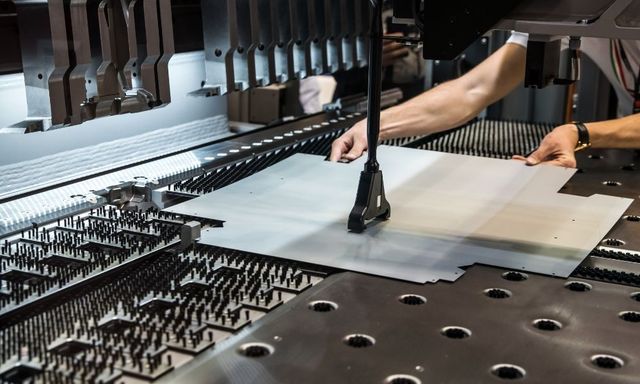
Custom metal fabrication is a service-oriented process where metal is cut, bent, and assembled to match a unique design provided by the client. This is bespoke manufacturing. It is necessary when a project has specialized requirements that stock parts simply cannot meet.
The Custom Process
This approach starts with design and engineering. Engineers work with CAD (Computer-Aided Design) software to create a blueprint that accounts for specific stresses, environments, and spatial constraints.
The physical production often utilizes advanced technology such as CNC (Computer Numerical Control) machining, laser cutting, waterjet cutting, and robotic welding. These technologies allow for extreme precision. In high-precision environments, operators must also manage the waste produced during cutting; effective systems for machine tool chip removal are essential to maintain the accuracy of the equipment and the safety of the workspace during these custom runs.
Advantages of Going Custom
The biggest benefit is design freedom. You are not limited by what is on the shelf. If you need a component made from a rare alloy to withstand extreme heat, or a part with complex geometry to fit into a compact medical device, custom fabrication is the only path.
Custom work also allows for adaptability. If a prototype fails during testing, the design can be tweaked and a new part fabricated relatively quickly. This iterative process is vital for innovation and research and development (R&D).
Drawbacks to Consider
Customization comes at a premium. You are paying for the engineering time, the machine setup (which changes for every job), and skilled labor. Additionally, because the parts are made to order, lead times are longer. You cannot simply pull a custom prototype off a warehouse shelf.
Key Differences Between Custom and Standard
When weighing your options, it is helpful to compare the two methods across three main categories: flexibility, cost, and lead times.
Flexibility and Design
Standard fabrication offers almost no flexibility. You must design your project around the available parts. Custom fabrication flips this dynamic, allowing the parts to be designed around the project. If your product requires a unique shape or specific material property—like corrosion resistance in a marine environment—custom is the superior choice.
Cost Implications
Cost is usually the deciding factor for most businesses.
- Standard: Low unit cost, low initial investment. Best for high-volume production.
- Custom: High unit cost, higher initial investment (design and setup). Best for low-to-medium volume production or high-value, specialized items.
However, “expensive” is relative. If a standard part fails because it wasn’t quite right for the job, the cost of downtime and repairs can easily exceed the price of a custom component that would have worked perfectly from the start.
Lead Times and Availability
Standard parts win on speed for immediate availability. However, supply chain issues can impact stock levels. Custom fabrication has a built-in lead time for production, but it offers a different kind of reliability: you know exactly when your part is being made and shipped, and you aren’t competing with the general market for inventory.
Applications and Use Cases
To help finalize your decision, consider where these fabrication methods are typically applied in the real world.
When to Choose Standard
- Construction: Framing a standard warehouse or office building.
- HVAC: Installing standard ductwork runs.
- Plumbing: Using standard piping and connectors.
- General Repair: Fixing machinery where OEM (Original Equipment Manufacturer) parts are readily available.
When to Choose Custom
- Aerospace: Creating lightweight, high-strength bracketry for a new aircraft fuselage.
- Medical: Designing surgical instruments or MRI casings that require precise dimensions and non-reactive materials.
- Architecture: Building a unique, curved metal staircase for a luxury hotel lobby.
- Industrial Machinery: Creating a specific hopper or conveyor section for a food processing plant that has limited floor space.
- Prototypes: Developing the first version of a new invention to test its viability.
Conclusion
Now that you have a better understanding of what specialty metal fabrication is and the industries it serves, you can see how crucial this process is in creating unique, specialized products. Whether it’s for aerospace, medical, architecture, industrial machinery, or prototypes, specialty metal fabrication plays a vital role in bringing innovative ideas to life.