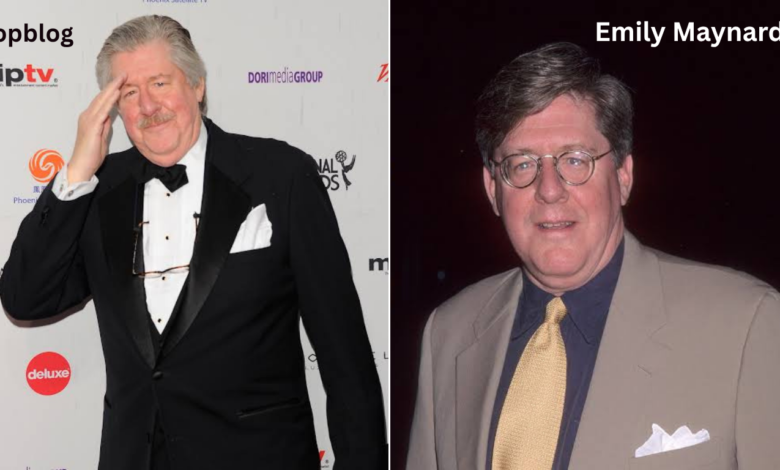
Edward Herrmann didn’t arrive in Hollywood as a ready-made star. His journey began in Washington, D.C., where he was born in 1943, but his formative years unfolded in Michigan. There’s something interesting about actors who don’t grow up surrounded by the entertainment industry—they often bring a grounded, almost academic approach to their craft. was exactly that kind of performer.
He studied at Bucknell University before refining his acting skills at the London Academy of Music and Dramatic Art. That international exposure shaped his theatrical sensibilities early on. You can almost trace his later performances back to that classical training—it gave him a command over language and presence that few actors naturally possess.
What stands out about Edward Herrmann is how intentional his path was. He didn’t chase fame recklessly; instead, he built a foundation. That slow-burn approach allowed him to develop a style that felt both intellectual and accessible, which would later become his signature in film, television, and stage.
Breaking Through Herrmann’s Rise to Fame
The rise of wasn’t explosive—it was steady, calculated, and undeniably earned. His early work in theater gave him credibility among critics, and it wasn’t long before television producers started to take notice. Unlike many actors who rely on typecasting, Edward Herrmann carved out roles that demanded nuance.
One of his early breakthrough moments came with his portrayal of Franklin D. Roosevelt. It wasn’t just an impression; it was a transformation. managed to capture both the authority and vulnerability of the historical figure, which earned him widespread recognition.
From there, opportunities expanded quickly. Whether it was television movies or supporting roles in feature films, Edward Herrmann became a reliable presence. Directors knew they could trust him to elevate a script, and audiences began associating his name with quality performances.
A Master of Versatility Across Mediums

What made Edward Herrmann truly special was his versatility. Some actors shine in one medium and struggle in others, but he moved seamlessly between stage, television, and film. That adaptability is rare and speaks volumes about his skill set.
In theater, brought a commanding presence. Live performances require a different kind of energy—there’s no second take, no editing safety net. He thrived in that environment, often delivering performances that felt both powerful and intimate at the same time.
On screen, his approach shifted subtly. He understood the camera’s sensitivity and adjusted his performances accordingly. Whether he was playing a corporate executive, a historical figure, or a family patriarch, Edward Herrmann never felt out of place. Each role carried its own texture, proving his range wasn’t just technical—it was deeply intuitive.
Edward in Gilmore Girls: A Defining Role
For many modern audiences, Edward Herrmann is best remembered for his role as Richard Gilmore in Gilmore Girls. This character introduced him to a new generation and solidified his place in pop culture.
Richard Gilmore wasn’t just a wealthy patriarch; he was layered, witty, and occasionally vulnerable. infused the role with warmth and authority, making Richard both intimidating and endearing. It’s a delicate balance, and he handled it effortlessly.
What’s fascinating is how Edward Herrmann elevated even the smallest scenes. A simple dinner table conversation could become memorable because of his delivery. His chemistry with co-stars added depth to the show, making his character feel essential rather than ornamental.
Film Contributions That Deserve More Attention
While television brought widespread recognition, his film work deserves equal appreciation. He appeared in a variety of movies, often in supporting roles that quietly stole the spotlight.
In The Lost Boys, for instance, Edward Herrmann played a character that added a grounded contrast to the film’s supernatural elements. It’s a subtle performance, but one that anchors the narrative in reality.
He also appeared in Annie, where his portrayal added charm and credibility to the story. These roles might not always have been front and center, but had a knack for making supporting characters feel indispensable.
The Distinctive Voice of Edward Herrmann
Beyond acting, was known for his unmistakable voice. Deep, articulate, and authoritative, it became one of his defining traits. Voice work is often overlooked, but in his case, it was a significant part of his legacy.
He narrated numerous documentaries, lending his voice to projects that required clarity and gravitas. Listening to Edward Herrmann narrate felt like being guided by someone who genuinely understood the subject matter.
There’s also an emotional quality to his voice. It wasn’t just about sounding polished—it carried weight. Whether he was narrating history or performing dialogue, voice added a layer of authenticity that enhanced the overall experience.
Awards and Recognition Over the Years
Recognition came steadily for Edward Herrmann, reflecting his consistent excellence rather than fleeting popularity. He won a Primetime Emmy Award, a milestone that validated his contributions to television.
However, awards only tell part of the story. earned something arguably more valuable—respect from peers and audiences alike. In an industry often driven by trends, he remained a constant figure of reliability.
Critics frequently praised his ability to bring depth to every role. Even when the script didn’t demand much, Edward Herrmann found ways to enrich his characters. That dedication to craft is what set him apart.
Personal Life and Off-Screen Persona
Away from the spotlight, maintained a relatively private life. He wasn’t one to chase headlines or court controversy. Instead, he focused on his work and personal relationships.
Those who worked with him often described him as thoughtful and professional. Edward Herrmann approached acting as a craft rather than a spectacle, which influenced how he interacted with colleagues and audiences.
There’s something refreshing about that kind of humility. In an industry where ego can overshadow talent, remained grounded. It’s a quality that not only defined his career but also shaped how he is remembered.
The Lasting Legacy of Herrmann
Even after his passing in 2014, Edward Herrmann’s influence continues to resonate. His performances remain accessible through streaming platforms, introducing him to new audiences who may not have experienced his work firsthand.
What makes his legacy enduring is its authenticity. didn’t rely on gimmicks or trends—he relied on skill, discipline, and a genuine love for storytelling. That combination ensures his work stands the test of time.
In many ways, Edward Herrmann represents a different era of acting—one where substance took precedence over spectacle. Yet, his relevance today proves that true talent never goes out of style.
Why Edward Herrmann Still Matters Today
In a constantly evolving entertainment landscape, it’s easy for actors to be forgotten. But Edward Herrmann remains a reference point for quality and consistency. His career offers valuable lessons for both aspiring actors and seasoned professionals.
He demonstrated that success doesn’t always require being the loudest or most visible. Sometimes, it’s about delivering reliable, meaningful performances over time. mastered that approach.
Ultimately, his story is one of dedication and artistry. Whether you remember him from television, film, or narration, Edward Herrmann left an imprint that continues to inspire. That’s not just a career—it’s a legacy worth celebrating.