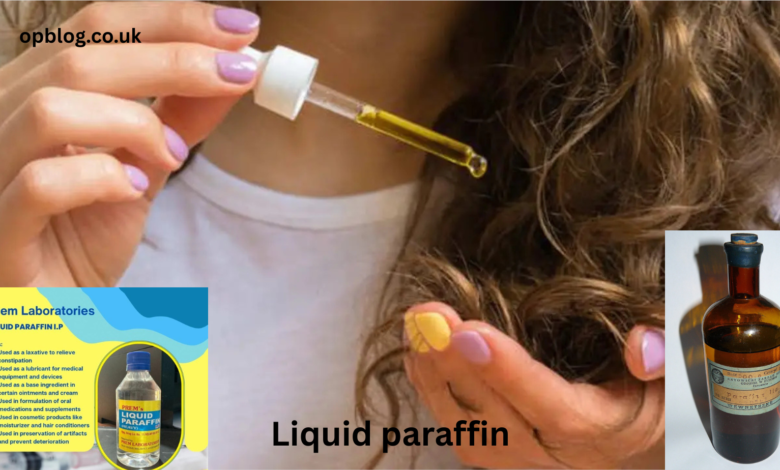
Liquid paraffin is one of those substances that quietly exists in the background of our daily lives. You may have seen it listed on medicine bottles, skincare labels, or even industrial product descriptions, yet many people don’t fully understand what it is or why it’s so widely used. Despite its simple appearance, liquid paraffin plays an important role across multiple industries, from healthcare to cosmetics and manufacturing.
In this article, we’ll take a deep dive into—what it is, how it’s made, where it’s used, and whether it’s truly safe. The goal is to explain everything clearly and casually, while still giving you expert-level insight. By the end, you’ll have a complete understanding of why remains so popular and relevant today.
What Is Liquid Paraffin
Liquid paraffin is a clear, colorless, odorless oily liquid that is derived from petroleum. It is a highly refined form of mineral oil, processed to remove impurities and make it safe for specific applications. Because of this purification process, liquid paraffin is chemically stable and non-reactive, which is one of its biggest advantages.
From a chemical perspective, is made up of hydrocarbons, mainly alkanes. These compounds do not easily break down or react with other substances. This stability is the reason liquid paraffin can be safely used in products that come into contact with skin or are even consumed in medicinal form under guidance.
Another important point is that comes in different grades. Pharmaceutical-grade liquid paraffin is used in medicines and cosmetics, while industrial-grade versions are used in machinery and manufacturing. Understanding this difference is crucial, because not all liquid paraffin is meant for human use.
How Liquid Paraffin Is Made

The production of Liquid paraffin begins with crude oil, which is refined through a distillation process. During this process, crude oil is heated and separated into different fractions based on boiling points. One of these fractions is mineral oil, which is then further refined to produce liquid paraffin.
This additional refining step is what make suitable for sensitive uses. Impurities such as aromatic hydrocarbons, sulfur compounds, and other potentially harmful substances are removed. The result is a highly purified, stable oil that meets strict safety standards, especially for pharmaceutical and cosmetic applications.
Manufacturers must follow strict regulations when producing liquid paraffin for medical or personal care use. Regulatory bodies ensure that the final product meets purity requirements. This is why pharmaceutical-grade liquid paraffin is considered safe when used as directed, while industrial-grade paraffin should never be substituted for it.
Medical Uses of Liquid Paraffin
One of the most well-known uses of liquid paraffin is in medicine, particularly as a laxative. It works by coating the stool and the intestinal lining, helping stool retain moisture and pass more easily. This makes it especially useful for people who experience chronic constipation or painful bowel movements.
is also used externally in medical settings. Doctors often recommend it as a skin protectant for patients with extremely dry or cracked skin. Because it forms a protective barrier, it helps prevent moisture loss and supports the skin’s natural healing process.
In hospitals, liquid paraffin is sometimes used to lubricate medical instruments or thermometers. Its non-reactive nature makes it ideal for such purposes. However, medical professionals are careful with dosage and duration when prescribing it, especially for oral use, to avoid potential side effects.
Liquid Paraffin in Skincare and Cosmetics
Liquid paraffin is a common ingredient in many skincare and cosmetic products, including moisturizers, creams, lotions, and baby oils. Its main role in these products is to lock in moisture. By forming a barrier on the skin, it reduces water loss and keeps the skin feeling soft and hydrated.
One of the reasons cosmetic brands rely on is its consistency and reliability. Unlike some natural oils, it does not go rancid, does not have a strong smell, and does not easily cause allergic reactions. This makes it suitable for sensitive skin, including baby skin.
Despite some criticism, dermatologists often confirm that liquid paraffin is non-comedogenic, meaning it does not clog pores when properly formulated. While it doesn’t actively nourish the skin with vitamins, it excels at protecting the skin barrier, which is a crucial aspect of overall skin health.
Industrial and Manufacturing Applications
Beyond healthcare and beauty, liquid paraffin is heavily used in industrial applications. It serves as a lubricant for machinery, helping reduce friction and wear between moving parts. Because it remains stable under different temperatures, it’s a reliable choice for many mechanical processes.
Liquid paraffin is also used in the textile industry. It helps lubricate fibers during processing, making them easier to spin and weave. This improves efficiency and reduces damage to materials during production.
In addition, it is used in the food industry in very controlled amounts. For example, it can be applied to baking molds or food-processing equipment as a release agent. In these cases, only food-grade liquid paraffin is used, and it must comply with strict safety standards.
Is Liquid Paraffin Safe
Safety is one of the most frequently asked questions about. The short answer is yes—when used correctly and in the appropriate grade, is considered safe. Pharmaceutical and cosmetic-grade liquid paraffin undergo rigorous purification to ensure they meet health standards.
However, misuse can lead to problems. Long-term or excessive oral use of as a laxative may interfere with the absorption of certain vitamins, particularly fat-soluble ones like vitamins A, D, E, and K. This is why doctors usually recommend short-term use unless otherwise advised.
For skincare, is generally well tolerated. Allergic reactions are rare, and it does not penetrate deeply into the skin. Still, as with any product, it’s wise to patch-test new skincare items, especially if you have sensitive or acne-prone skin.
Common Myths About Liquid Paraffin
One common myth is that liquid paraffin is harmful simply because it is derived from petroleum. In reality, many safe and widely used products are petroleum-derived. The key factor is the level of refinement, not the source material.
Another misconception is that liquid paraffin “suffocates” the skin. While it does form a barrier, this barrier is breathable and designed to reduce moisture loss, not block oxygen completely. Healthy skin function is not compromised when is used in well-formulated products.
Some people also believe that natural oils are always better than While natural oils have their benefits, they can cause allergic reactions, oxidize over time, or clog pores in some individuals. Liquid paraffin offers consistency, stability, and predictability that many formulations rely on.
Liquid Paraffin vs. Other Oils
When compared to vegetable oils or essential oils, stands out for its neutrality. It doesn’t have an active scent, color, or chemical reactivity. This makes it an excellent base ingredient in many formulations where stability is important.
Unlike natural oils, liquid paraffin does not contain vitamins or antioxidants. However, this doesn’t make it inferior. Its primary function is protection rather than nourishment. In many cases, it is combined with other ingredients that provide nutrients while seals them in.
In medical and industrial contexts, often outperforms alternatives due to its long shelf life and resistance to degradation. These qualities explain why it remains a preferred option despite the availability of newer materials.
Final Thoughts on Liquid Paraffin
Liquid paraffin is a versatile, reliable, and widely used substance with applications that span medicine, skincare, and industry. Its refined nature, chemical stability, and protective properties make it invaluable in many everyday products we often take for granted.
While it may not be flashy or trendy, has earned its place through decades of safe and effective use. Like most substances, its safety and usefulness depend on how it is used and which grade is chosen. When sourced and applied correctly, it remains one of the most dependable ingredients available.
Understanding liquid paraffin helps you make informed choices—whether you’re reading a product label, using a prescribed medication, or evaluating industrial materials. In the end, it’s a perfect example of how simplicity and science can work together to create something truly practical and enduring.