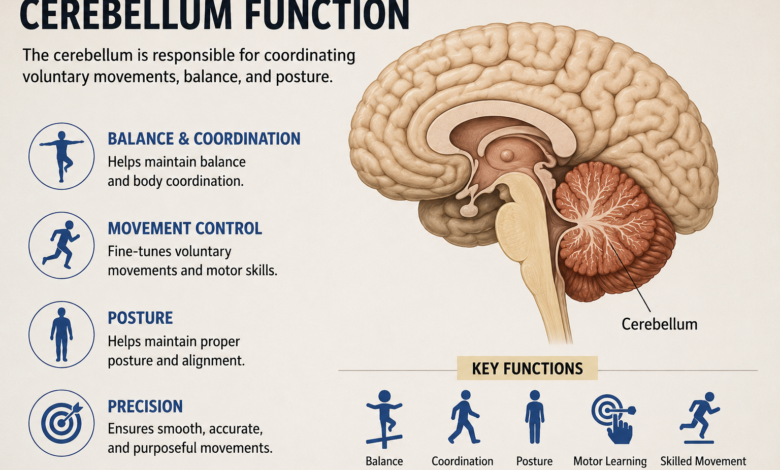
Cerebellum Function is one of the most fascinating aspects of how the human brain operates behind the scenes. Located at the back of the brain, just beneath the cerebrum, the cerebellum might look small, but it handles incredibly complex tasks. Its primary job revolves around coordination, precision, and balance—things we often take for granted.
Unlike other brain regions that deal with conscious thinking, the works quietly in the background. It fine-tunes movements rather than initiating them. Whether you’re walking, typing, or even blinking, this part of the brain ensures everything happens smoothly and without awkward interruptions.
What makes the cerebellum function truly important is its role in maintaining harmony between different body systems. It doesn’t just control movement; it integrates sensory input and adjusts motor activity accordingly. This constant adjustment is what keeps your actions fluid and controlled.
Understanding the Core Roles of Function
At its core, the cerebellum function is all about coordination. When your brain sends signals to move, the cerebellum steps in to refine those signals. It ensures that your muscles work together instead of against each other, which is why your movements appear natural and balanced.
Another key responsibility is maintaining posture and equilibrium. Even when you’re standing still, your body is making tiny adjustments to stay upright. The manages these micro-corrections, helping you avoid losing balance without even realizing it.
Timing is another subtle yet powerful role. The cerebellum function ensures that movements happen at the right moment and in the correct sequence. This is especially important in activities like playing sports or musical instruments, where precision and rhythm are essential.
Anatomy Behind the Cerebellum
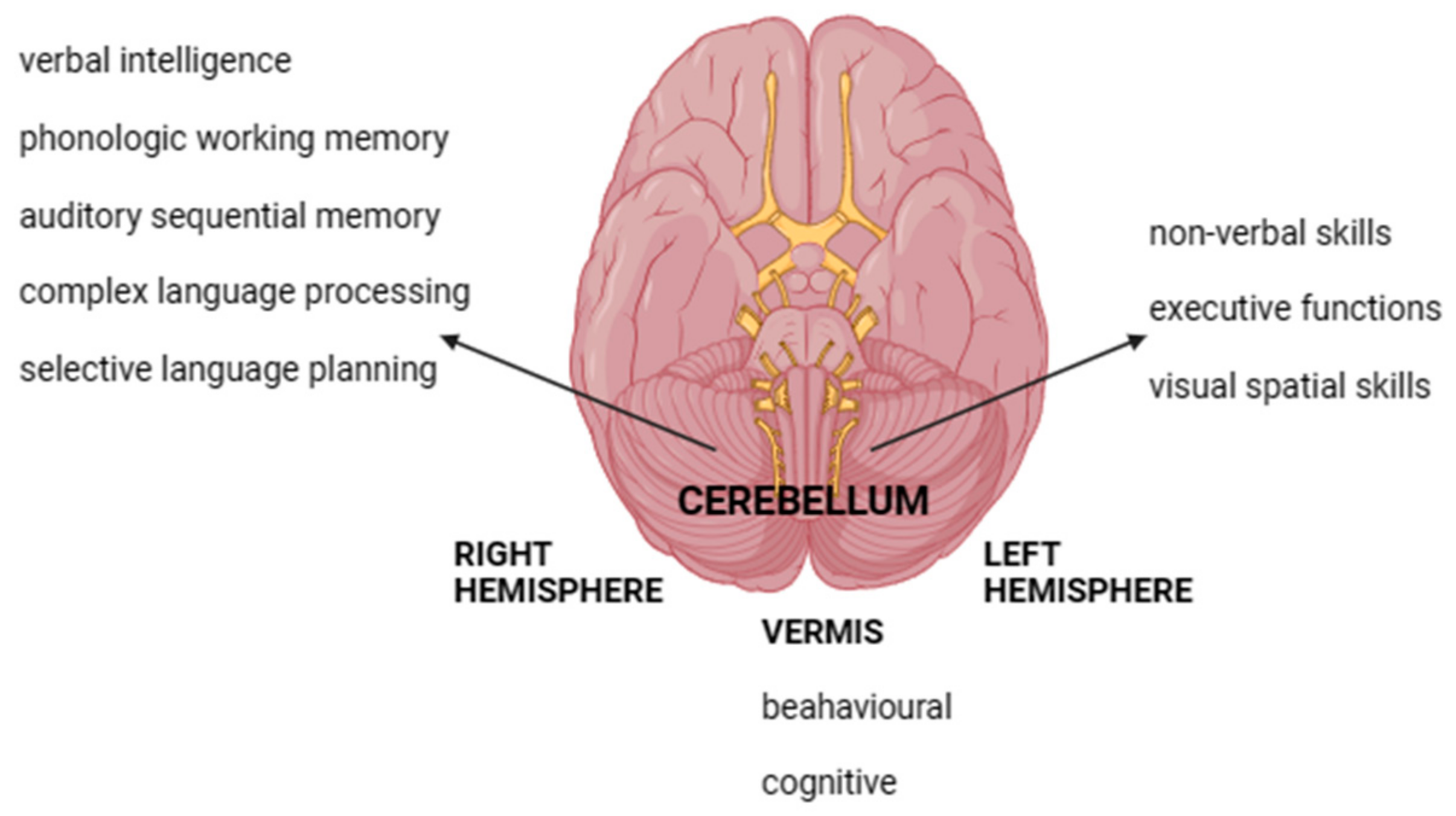
To understand how the Cerebellum Function works so effectively, it helps to look at its structure. The cerebellum consists of two hemispheres and a central section called the vermis. Each part contributes to different aspects of coordination and control.
The outer layer, known as the cerebellar cortex, contains densely packed neurons. In fact, a significant portion of the brain’s neurons are located here. This dense network allows the to process large amounts of information quickly and efficiently.
Beneath the cortex lies the white matter, which connects different regions of the cerebellum and links it to other parts of the brain. These connections are essential for the cerebellum function, as they allow it to receive sensory input and send corrective signals in real time.
How Cerebellum Function Supports Movement
Movement might seem simple, but it involves a complex chain of events. The plays a crucial role in ensuring that these events happen seamlessly. When you decide to move, your brain sends instructions to your muscles, but the cerebellum refines those instructions.
For example, when you reach for an object, the cerebellum function calculates the distance, speed, and force required. It adjusts your movement as it happens, ensuring accuracy. Without this fine-tuning, even basic actions would feel clumsy and uncoordinated.
This process becomes even more important during rapid or complex movements. Activities like running, dancing, or playing sports rely heavily on It allows you to adapt quickly, maintain balance, and execute movements with precision.
The Role of Function in Learning Skills
One of the lesser-known aspects of cerebellum function is its involvement in motor learning. When you learn a new skill, such as riding a bike or typing on a keyboard, the cerebellum plays a key role in refining those movements over time.
Initially, new actions may feel awkward or inconsistent. However, as you practice, the gradually improves coordination and efficiency. This is why repeated practice leads to smoother and more automatic movements.
Over time, these learned skills become almost second nature. You no longer have to think about each step because the cerebellum function has optimized the process. This ability to adapt and improve is what makes it essential for both learning and performance.
Signs of Impaired Cerebellum Function
When the is disrupted, the effects can be quite noticeable. One of the most common symptoms is a lack of coordination, often referred to as ataxia. This can make simple movements appear shaky or unsteady.
Balance issues are another clear indicator. Individuals with impaired cerebellum function may struggle to stand or walk without support. Even routine tasks can become challenging due to instability.
Speech and eye movement can also be affected. Slurred speech or difficulty controlling eye movements may occur, highlighting how the extends beyond just physical coordination. These symptoms often require medical evaluation for proper diagnosis.
Factors That Affect Function
Several factors can influence cerebellum function, both positively and negatively. Injuries to the brain, such as trauma or stroke, can disrupt its normal operation. These conditions often require rehabilitation to restore function.
Chronic conditions, including certain neurological disorders, can also impact These disorders may gradually affect coordination and balance, making early detection and management crucial.
Lifestyle choices play a role as well. Excessive alcohol consumption, for instance, can impair cerebellum function temporarily or even permanently over time. On the other hand, a healthy lifestyle supports optimal brain performance and overall well-being.
Improving and Supporting Function
Maintaining strong cerebellum function involves a combination of physical and mental activities. Exercises that challenge balance and coordination, such as yoga or dancing, can help keep this part of the brain active.
Engaging in skill-based activities is equally beneficial. Learning new movements or practicing complex tasks stimulates the and strengthens its neural connections. This keeps your coordination sharp and responsive.
Nutrition and rest also matter. A balanced diet rich in essential nutrients supports brain health, while adequate sleep allows the brain to recover and process information. Together, these habits contribute to better cerebellum function over time.
Cerebellum Function and Its Broader Impact
While often associated with movement, the cerebellum function may also influence cognitive processes. Research suggests it plays a role in attention, language, and even emotional regulation. This expands its importance beyond physical coordination.
This broader role highlights how interconnected the brain truly is. The works alongside other brain regions, contributing to a wide range of activities that shape daily life. It’s not just about movement—it’s about efficiency and balance in everything you do.
Understanding this connection can change how we view brain health. By supporting cerebellum function, you’re not only improving coordination but also enhancing overall mental performance and stability.
Final Thoughts on Cerebellum Function
The is a perfect example of how something small can have a massive impact. From maintaining balance to refining complex movements, it plays a crucial role in how we interact with the world.
Its ability to operate quietly in the background makes it easy to overlook, yet its importance cannot be overstated. Without proper cerebellum function, even the simplest tasks would become difficult and frustrating.
In the end, taking care of your brain means supporting every part of it, including the cerebellum. With the right habits and awareness, you can maintain strong and enjoy smoother, more controlled movements throughout your life.