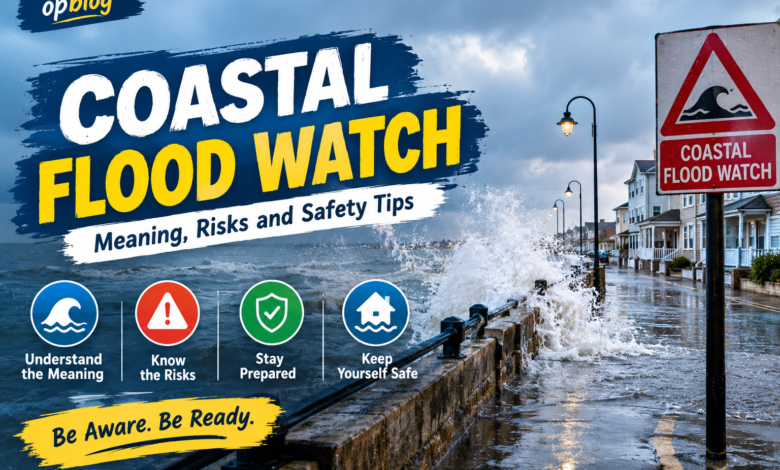
Coastal Flood Watch can develop faster than many people expect, especially when strong winds, high tides, and approaching storms occur at the same time. For people living near oceans, bays, and coastal waterways, understanding weather alerts is an important part of staying safe. A coastal flood watch is one such alert that helps residents prepare for conditions that could cause water to move onto normally dry land. Although it does not automatically mean flooding will happen, it signals that the weather deserves attention.
Knowing what this alert means, why it is issued, and how to respond can make a significant difference during severe weather. From protecting property to planning evacuation routes, a little preparation can prevent confusion when conditions begin to change. This guide explains the warning system, common causes of coastal flooding, potential dangers, and practical steps households can take before water levels rise.
What Is a Coastal Flood Watch?
A coastal flood watch is a weather alert issued when conditions are favorable for coastal flooding to develop. It generally means that flooding is possible within a specified area and time period, but forecasters may not yet be certain about its exact severity or location. The alert gives residents, businesses, and local authorities an opportunity to prepare before the situation becomes more dangerous.
These watches are commonly associated with high tides, strong onshore winds, powerful storms, and unusually high water levels. Depending on the location, flooding may affect beaches, waterfront roads, low-lying neighborhoods, Coastal Flood Watch marinas, and properties close to tidal rivers. Even communities that do not experience flooding regularly may face problems when several weather conditions combine.
It is important to understand that a watch is not a guarantee that floodwater will reach your property. Weather systems can change direction, weaken, or produce different water levels than initially expected. Nevertheless, a coastal flood watch should never be ignored simply because the sky looks clear at the moment. Conditions along the shoreline can change quickly, making early preparation far more useful than waiting until water becomes visible.
What Causes Coastal Flooding?
Coastal flooding usually occurs when seawater rises above its normal boundaries and spreads into nearby land. Several natural processes can contribute to this situation, and the greatest risk often develops when multiple factors occur together. Understanding these causes helps explain why some coastal storms create widespread damage while others produce relatively minor impacts.
Storm Surge and Strong Winds
Storm surge is one of the most significant causes of dangerous coastal Coastal Flood Watch. It occurs when strong winds associated with a storm push seawater toward the shoreline, raising water levels above what would normally be expected from the tide alone. The pressure and movement of a powerful storm can force substantial amounts of water into bays, estuaries, and low-lying coastal areas.
The shape of the coastline also affects the severity of storm surge. Some bays and inlets can concentrate incoming water, while shallow coastal waters may allow levels to rise more dramatically. If a storm arrives during high tide, the additional water can make flooding considerably worse Coastal Flood Watch.
High Tides and Rising Sea Levels
High tides are a regular part of Coastal Flood Watch life, but exceptionally high tides can create problems when combined with other weather conditions. In certain locations, a high tide may be enough to flood streets, cover sections of a waterfront walkway, or push water through drainage systems. When strong winds or heavy rainfall occur at the same time, the consequences can become more serious.
Long-term sea-level rise adds another challenge. As average sea levels increase, coastal communities may experience flooding at water levels that previously caused little or no disruption. This means that even relatively ordinary storms can create greater problems in vulnerable areas than they did decades ago.
Heavy Rainfall and Coastal Drainage Problems
Rainfall can make coastal flooding worse, Coastal Flood Watch particularly in urban communities with limited drainage capacity. When heavy rain falls while seawater levels are already elevated, stormwater may struggle to drain into the ocean or nearby waterways. In some places, seawater can even move backward through drainage outlets, allowing water to collect in streets and low-lying properties.
Flooding does not always begin at the beach. Water may appear in underground parking areas, roadside drains, residential gardens, or neighborhoods several blocks inland. This is why coastal residents should pay attention to rainfall forecasts and drainage conditions as well as warnings about ocean water levels.
Coastal Flood Watch vs. Coastal Flood Warning
Weather alerts communicate different levels of concern, and understanding the distinction helps people decide when to prepare and when immediate protective action may be necessary. A watch generally indicates the potential for flooding, whereas a warning means flooding is expected, imminent, occurring, or otherwise sufficiently likely to require a more urgent response. Exact terminology and criteria can vary by weather agency and region.
During a watch, residents should review emergency plans, monitor official forecasts, secure outdoor belongings, and check whether local roads Coastal Flood Watch or evacuation routes could become inaccessible. This is the time to charge mobile phones, gather important documents, and make arrangements for family members who may need assistance. Taking these steps early reduces the pressure of making decisions at the last minute.
When a warning is issued, the situation calls for greater urgency. Follow instructions from local emergency officials, avoid flood-prone areas, and evacuate if authorities direct you to do so. Do not assume that a warning is unnecessary because your immediate street appears dry. Floodwater can travel through low-lying areas unexpectedly, Coastal Flood Watch and road conditions may deteriorate before the danger is obvious.
Areas Most at Risk During Coastal Flooding
Low-lying Coastal Flood Watch communities are particularly vulnerable because even a moderate increase in water levels can push seawater onto nearby land. Homes built close to the shoreline, waterfront businesses, and properties beside tidal creeks may experience flooding earlier than locations on higher ground. The level of risk depends on local geography, elevation, storm strength, and the condition of natural or engineered coastal defenses.
Islands, barrier beaches, and narrow coastal peninsulas can face additional challenges. These areas may have limited road connections, making it harder for residents to leave when water covers important routes. Strong waves and erosion can also damage beaches, dunes, and protective structures, increasing the chance of water reaching developed areas.
However, coastal flooding is not restricted to houses directly beside the sea. Estuaries, tidal rivers, ports, and connected waterways can carry elevated water levels farther inland. Coastal Flood Watch People living in these locations should learn whether their neighborhoods have experienced flooding in the past and check local flood maps for information about exposure. Previous flood history can be useful, although it cannot predict every future event.
How to Prepare Before Flooding Begins
Preparation is most effective when it happens before a storm approaches. Waiting until an alert becomes urgent can leave households with fewer choices, particularly when stores close, traffic increases, or emergency services become busy. A coastal flood watch provides an opportunity to organize essential supplies and make sensible decisions without unnecessary panic.
Start by reviewing the local forecast and identifying the areas around your home that could flood. Check whether your usual route to work, school, or a medical facility passes through low-lying streets. If you live in a vulnerable area, identify a safer route to higher ground and discuss where family members should meet if communication becomes difficult.
Next, protect important belongings and household Coastal Flood Watch equipment. Move valuable documents, electronics, medicines, and irreplaceable items to a higher level when practical. Secure outdoor furniture, gardening equipment, and loose objects that could be carried away by strong winds or moving water. Keep emergency supplies together so that essential items are easy to find.
A basic emergency kit should include drinking water, nonperishable food, a flashlight, spare batteries, a first-aid kit, necessary medicines, phone chargers, and copies of important documents. Include supplies for children, older adults, and pets where