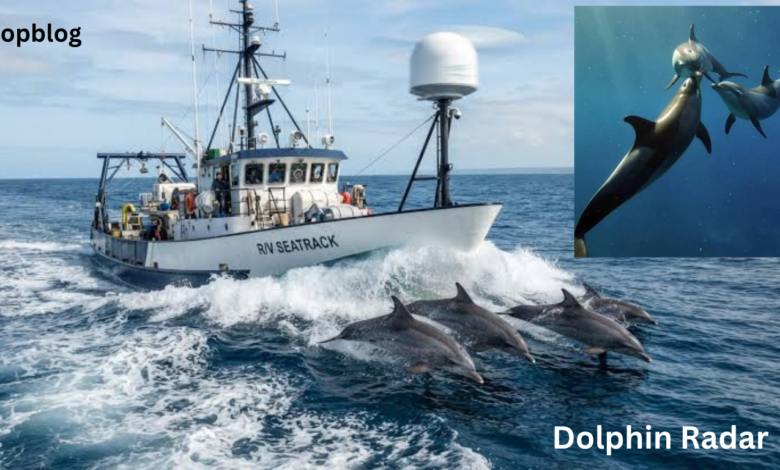
Dolphin Radar is commonly used to describe one of the most fascinating abilities found in marine life. In scientific terms, this system is known as Echolocation, a natural mechanism that allows dolphins to navigate, hunt, and understand their surroundings using sound instead of sight. While humans rely heavily on vision, dolphins depend on sound waves to interpret the underwater world.
At a basic level, works by emitting a series of clicking sounds. These clicks travel through water, bounce off objects, and return as echoes. The dolphin then processes these echoes to determine the distance, size, shape, and even the density of objects. It’s not just detection—it’s a detailed sensory experience that rivals advanced technology.
What makes this system truly remarkable is its adaptability. Dolphin radar functions effectively in dark, murky, or deep waters where visibility is extremely limited. In such environments, even the most advanced human tools can struggle, yet dolphins operate with effortless precision.
The Biology Behind Dolphin Radar Abilities
To fully understand dolphin radar, it’s important to explore the biological structures that make it possible. Dolphins produce sound clicks using specialized nasal passages located near their blowhole. These sounds are then focused through a fatty structure in their forehead called the melon, which acts like an acoustic lens.
Once the sound waves are projected into the water, they spread out and interact with objects in the environment. When the echoes return, they are received through the dolphin’s lower jaw. This might sound unusual, but the jawbone is perfectly designed to channel sound vibrations toward the inner ear.
The real magic happens in the brain. Dolphins have highly developed auditory processing capabilities, allowing them to interpret echoes almost instantly. Researchers in Marine Biology believe that dolphins can build a mental “image” of their surroundings using sound alone. This level of processing is what makes dolphin radar so efficient and precise.
Dolphin Compared to Human Sonar Technology

When people hear the term Dolphin Radar they often compare it to human-made sonar systems. While both rely on sound waves, the differences are significant. Human sonar, used in submarines and ships, is powerful and can cover long distances. However, it lacks the fine detail that dolphins naturally achieve.
Dolphins can detect extremely small differences between objects. For instance, they can distinguish between materials like metal and plastic or identify a fish hidden beneath sand. This level of sensitivity is something engineers are still trying to replicate in modern sonar systems.
Another key difference is flexibility. Dolphin radar adjusts automatically based on the situation. If a dolphin is hunting, it may increase the frequency of clicks for more detailed information. Human sonar systems, on the other hand, often require manual adjustments and calibration.
The Role of Radar in Hunting and Survival
Dolphin radar is not just a fascinating ability—it’s essential for survival. In the wild, dolphins rely on echolocation to locate prey, avoid predators, and navigate complex underwater environments. Without this system, their ability to hunt effectively would be significantly reduced.
When hunting, dolphins emit rapid sequences of clicks known as “buzzes.” These high-speed signals provide real-time updates on the movement of prey. As the dolphin gets closer, the frequency of clicks increases, allowing for more precise targeting.
Interestingly, dolphin radar also helps with cooperation. Dolphins often hunt in groups, and their echolocation abilities allow them to coordinate movements and trap fish efficiently. This combination of intelligence and sensory capability makes them highly effective predators.
Communication and Social Interaction Through Sound
While dolphin radar is primarily associated with navigation and hunting, it also plays a role in communication. Dolphins use a variety of sounds, including whistles and clicks, to interact with one another. These sounds can convey information about identity, location, and even emotional states.
Each dolphin is believed to have a unique signature whistle, similar to a name. This allows individuals to recognize each other within a group. Although echolocation clicks are mainly used for environmental sensing, they can overlap with communication in certain contexts.
The social aspect of dolphin life adds another layer to the importance of dolphin radar. It’s not just about survival—it’s about maintaining complex relationships within pods. This dual function highlights how versatile and advanced their sound-based system really is.
Scientific Research and Discoveries About Radar
Scientists have been studying dolphin radar for decades, yet new discoveries continue to emerge. Advances in technology have allowed researchers to observe dolphins in more detail, revealing just how sophisticated their echolocation abilities are.
One of the most intriguing findings is that dolphins may be able to detect internal structures of objects. Some experiments suggest that they can differentiate between hollow and solid items or even identify objects hidden inside containers. This goes far beyond simple detection.
Research in fields like Neuroscience is helping scientists understand how dolphins process such complex information. By studying their brains, researchers hope to uncover insights that could influence future technological developments.
How Dolphin Radar Inspires Modern Technology
The concept of dolphin radar has inspired engineers and scientists to improve human-made sonar systems. By studying how dolphins use sound, researchers aim to create more efficient and precise detection tools for underwater exploration.
For example, advancements in underwater robotics often draw inspiration from dolphin echolocation. These robots are designed to navigate challenging environments, such as deep-sea trenches or underwater caves, where traditional methods fall short.
There’s also growing interest in applying these principles outside of marine environments. Technologies based on echolocation concepts could potentially improve medical imaging, navigation systems, and even assistive devices for visually impaired individuals.
Misconceptions About Dolphin
Despite its popularity, there are several misconceptions about dolphin radar. One common misunderstanding is that dolphins use radar in the same way humans do. In reality, radar relies on radio waves, while dolphins use sound waves, making their system fundamentally different.
Another misconception is that dolphin radar is limited to simple tasks. In truth, it’s an incredibly advanced system capable of detailed analysis. Dolphins are not just detecting objects—they’re interpreting complex information about their environment.
Some people also assume that this ability is unique to dolphins. While dolphins are among the most skilled users of echolocation, other animals like bats and certain whales also use similar systems. However, dolphins remain one of the most studied and impressive examples.
Why Dolphin Radar Matters in Understanding Nature
The study of goes beyond curiosity—it provides valuable insights into how nature solves complex problems. Dolphins have evolved a system that allows them to thrive in environments where visibility is limited, demonstrating the power of adaptation.
Understanding this ability also helps researchers appreciate the intelligence of dolphins. Their capacity to process detailed information and use it effectively highlights a level of cognitive sophistication that continues to intrigue scientists.
From a broader perspective, dolphin radar reminds us that human technology is not always the benchmark. Nature has developed solutions over millions of years, many of which still outperform our own inventions in specific contexts.
Final Thoughts on Dolphin Radar
The concept of dolphin offers a fascinating glimpse into the intersection of biology, physics, and intelligence. It’s a natural system that combines precision, efficiency, and adaptability in ways that continue to inspire research and innovation.
What stands out most is how seamlessly dolphins use this ability in their daily lives. Whether navigating dark waters, hunting prey, or interacting with their pod, dolphin radar operates effortlessly in the background.
As research continues, our understanding of this remarkable system will only deepen. For now, it remains one of the most impressive examples of how nature can achieve what technology is still striving to replicate.